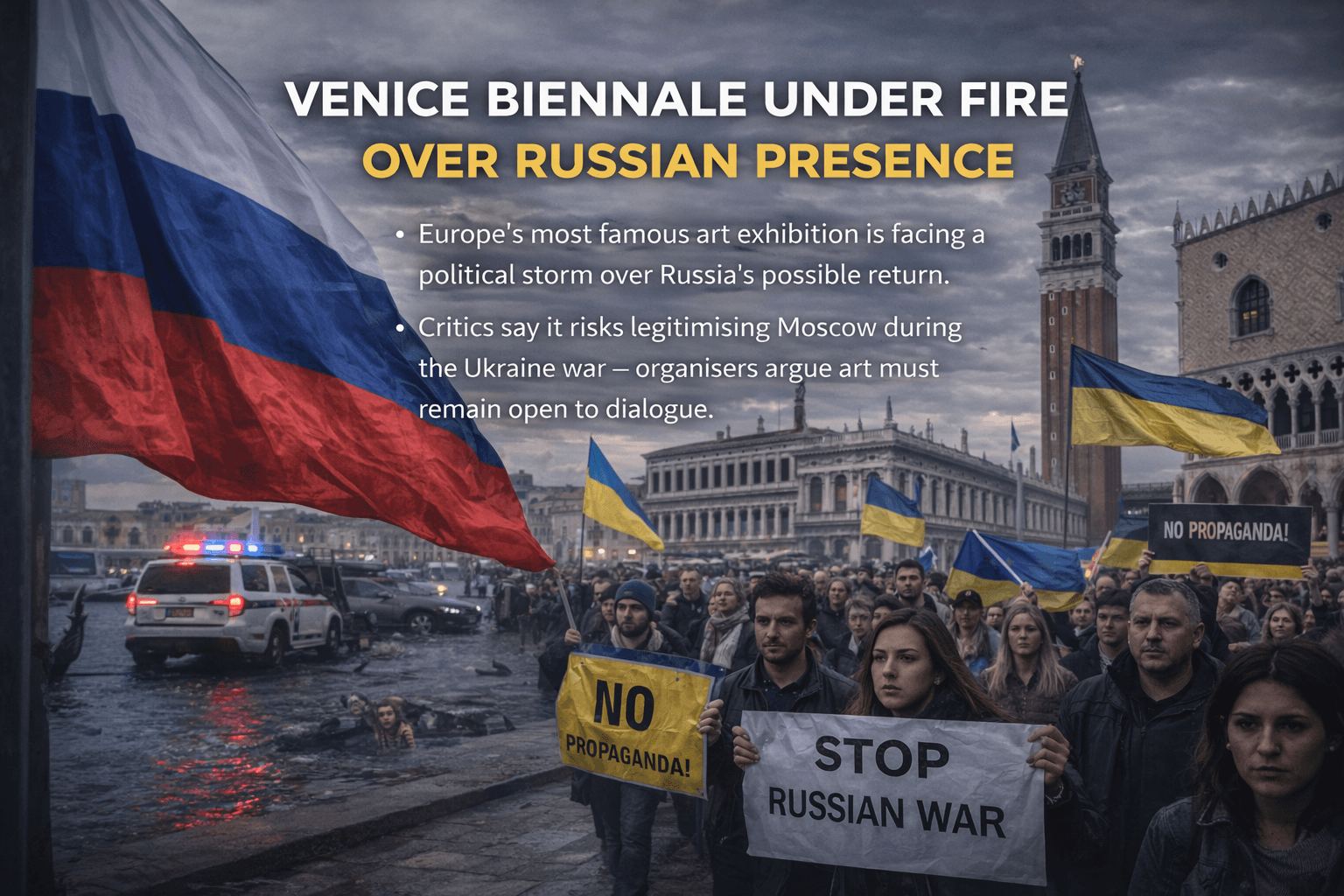
Europe’s most famous art exhibition is facing a political storm over Russia’s possible return.
The Venice Biennale, one of the most prestigious international art exhibitions in the world, is facing intense criticism over the potential presence of Russia at its upcoming edition.
What is normally a celebration of global art has suddenly become the centre of a geopolitical dispute one that now involves governments, artists, and even the European Union.
Russia’s Return Sparks Backlash
Russia has been largely absent from recent editions of the Biennale after its 2022 invasion of Ukraine. The Russian pavilion remained closed as artists, curators, and institutions distanced themselves from the Kremlin following the outbreak of war.
Now the possibility of Russia participating again has triggered a wave of protests.
Ukraine and a growing coalition of European leaders argue that allowing Russia to return risks turning a major cultural platform into a stage for political propaganda during an ongoing conflict.
More than 20 European countries have reportedly urged the organisers to block Russia’s participation entirely.
Critics say the issue is not simply about art it is about symbolism.
With the war still raging in Ukraine, they argue that giving Russia space at one of the world’s biggest cultural events could send the wrong signal about Europe’s stance toward Moscow.
EU Funding Threat Enters The Debate
The controversy escalated further when the European Commission warned it could withdraw financial support if the event proceeds with Russia’s involvement.
The EU has said that cultural institutions receiving European funding should reflect democratic values and avoid actions that could legitimise Russia’s war against Ukraine.
The Biennale receives roughly €2 million in EU funding, making the warning politically and financially significant.
The possibility of losing that funding has turned what began as a cultural dispute into a much larger diplomatic confrontation.
Organisers Defend Cultural Dialogue
Despite the pressure, Biennale leadership has defended the idea that art should remain open even during times of conflict.
Organisers argue that the Biennale has historically served as a space where cultures and ideas from around the world can coexist, even when political tensions are high.
Supporters of this view say banning countries outright could undermine the very purpose of international cultural events.



-1-640x427.png&w=3840&q=75)