AI is becoming part of everyday life, but too many people are still expected to use it without really understanding how it works. This piece explains AI fundamentals in plain English and argues that clear explanation is now a basic requirement for responsible AI use.
AI fundamentals in plain English and why that matters more than ever
The future of AI should not be explained only to engineers. If normal people use it, normal people should be able to understand it.
The problem with ai talk
A lot of people are now using AI every day, but many still feel like they are dealing with a black box. They know it can write, summarise, answer questions, brainstorm, and help with tasks, but they do not really know what is happening under the hood. That matters because the less people understand a tool, the more likely they are to either trust it too much or dismiss it too quickly. Good public understanding starts with plain English, not jargon, and that is especially true for a technology that is already shaping work, learning, and everyday decision-making. Australia’s current policy direction also leans heavily toward helping people get the best out of AI in jobs, communities, and personal life, which makes basic understanding more important, not less.
The opinion side of this is simple. If AI companies, governments, schools, and the media want the public to use AI responsibly, then they have to stop talking about it like it is some mystical machine that only specialists can interpret. The average person does not need a PhD in computer science. They need a solid grasp of what the system is, what it does well, where it struggles, and why its answers can sometimes sound convincing even when they are wrong. That is not oversimplifying. That is treating people with respect. Guidance aimed at beginners now explicitly says you do not need a technical background to get started, and that alone tells you the conversation has shifted.
What ai is in plain english
In plain English, AI is a broad label for computer systems designed to do tasks that usually need human intelligence, such as recognising patterns, understanding language, making predictions, or helping make decisions. That broad definition matters because AI is not one single thing. Some AI systems classify images. Some detect fraud. Some recommend songs. Some drive chatbots. Some help analyse documents. Lumping all of it together creates confusion, and confusion is where hype grows. A clear explanation starts by saying that AI is a family of tools, not one magic brain.
This is where things change for most readers. When people say “AI” in everyday conversation now, they often mean generative AI, and more specifically large language models. These are models built to work with language. They learn patterns from very large amounts of text so they can generate, transform, and respond in ways that feel natural. The key point is that they do not “know” things the way a person does. They work by predicting likely language based on context. That one idea is probably the most important thing an everyday user can learn because it explains both the power and the weakness of systems like ChatGPT.
Latest
Top Picks
The latest industry news, interviews, technologies, and resources.
AI incident response is moving from a niche governance topic to a core business capability. As organisations embed AI deeper into operations, the real question is no longer whether they can deploy it, but whether they can stop it, investigate it and recover when something goes wrong.
How large language models actually work
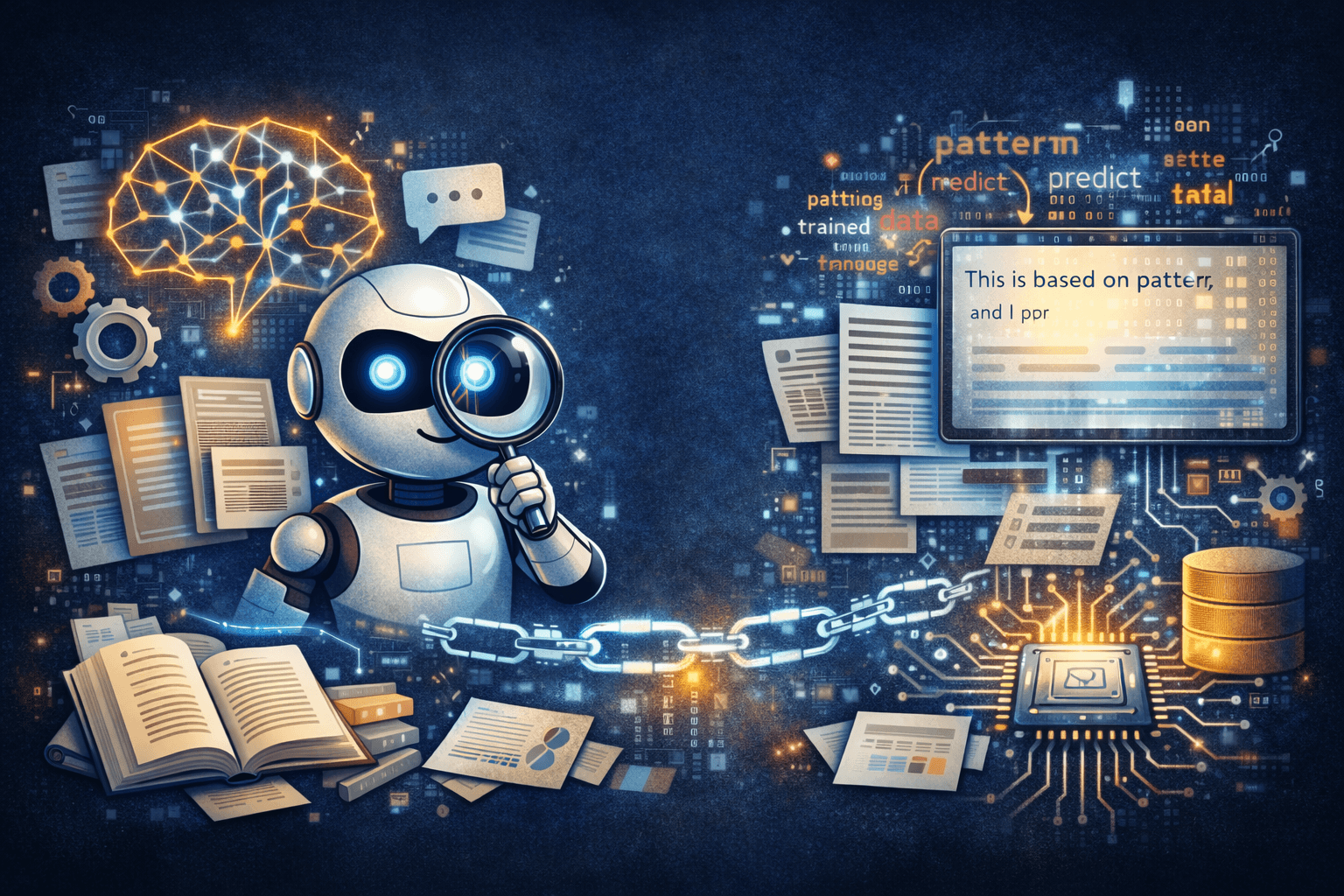
The plain-English version of how a large language model works is this. First, it is trained on huge amounts of text so it can learn patterns in words, sentences, meaning, structure, and style. Then, when you type a prompt, it processes that input and predicts what language is most likely to come next, piece by piece, using the context of the conversation. Over time, advances in computing power, training methods, and access to large datasets made these models much more capable than earlier systems. That does not make them human. It makes them very advanced pattern learners.
That can sound almost too simple, but the simplicity is useful. A lot of confusion disappears once you understand that these models are fundamentally prediction systems for language. They can appear thoughtful because human language itself contains reasoning patterns, common structures, argument styles, explanations, examples, and conversation habits. So when the model generates text, it can look like thinking from the outside even though the process underneath is pattern prediction. That is why these systems can be astonishingly helpful one moment and strangely wrong the next. The same mechanism that produces fluent answers can also produce confident mistakes.
Where the model gets its ability from
People also deserve a plain answer to where the capability comes from. The current public explanation is that foundation models are developed using three main information sources: publicly available information, information accessed through partnerships or licensed arrangements, and information provided or generated by users, trainers, and researchers. That matters because many public arguments around AI turn into a fog of assumptions about what the model has seen, what it stores, and how it improves. A cleaner explanation does not solve every concern, but it gives people a better starting point for asking smarter questions about data, privacy, and performance.
What this really means is that AI capability is not coming from magic and it is not appearing out of nowhere. It is the result of data, training, computing power, refinement, and product design. When people understand that, they start to see AI less like an oracle and more like a built system with strengths, weaknesses, trade-offs, and incentives. That is a healthier way to relate to it. The public does not need to memorise technical architecture diagrams, but it does need to understand enough to know that every AI tool is shaped by choices made long before the user ever types a prompt.
Why prompts matter so much
Another basic truth that should be explained more often is that generative AI systems are usually guided by prompts. The user enters a prompt, the system interprets it, and the quality of the output often depends on how clearly the task is framed. In education guidance, prompt refinement is described as a normal part of using these systems well. That matters because many people still treat a bad first answer as proof that AI is useless, while others treat a slick first answer as proof that it is brilliant. In reality, good use often depends on iteration, context, and clearer instructions.
My opinion is that prompt quality has become the new digital literacy skill that many workplaces and classrooms still have not properly caught up with. We spent years teaching people how to search the web better, judge websites better, and use productivity software better. Now we need to teach people how to ask AI better questions, how to refine unclear requests, and how to recognise when the answer needs another pass. That is not a niche technical trick. It is fast becoming a basic practical skill.
Why plain english matters for trust
Plain-English explanations are not just a nice extra. They are part of responsible AI use. Government writing guidance in Australia stresses simple words, short headings, and wording most people understand. Separate government material on AI assurance explicitly asks agencies to explain their AI use in plain language. That is important because trust should not depend on whether a reader can decode specialist terminology. If a system affects the public, the public should be able to understand what it is for and how it is being used.
This is where the opinion becomes sharper. Too much AI discussion still hides behind inflated language. People hear terms like foundation model, multimodal reasoning, fine-tuning, orchestration, and synthetic evaluation, and many simply switch off. Some of those terms are real and useful in the right setting, but they can also become a shield that blocks ordinary understanding. Clear explanation is not the enemy of sophistication. In many cases, it is the proof of it. If someone really understands how an AI system works, they should be able to explain it in language that a normal adult can follow.
What ai still cannot do
Understanding how AI works in plain English also helps people understand what it does not do. A large language model is not a person. It does not have lived experience, self-awareness, or human judgment in the normal sense. It does not understand the world the way a human being does. It does not “know” facts in the same way a person knows them. It predicts useful language based on patterns and context. That is why it can produce remarkable output and still get something basic wrong. If users grasp that, they are less likely to hand over too much authority to a system that was never built to be a final judge of reality.
This is also why learning the basics is a safety issue, not just an education issue. When people think AI is a thinking machine in the human sense, they are more likely to trust it blindly. When they understand it as a trained prediction system with strengths and limitations, they are more likely to use it well. That difference matters in schools, workplaces, government services, research, and daily life. It changes how people ask questions, how they judge answers, and how quickly they realise they need to verify something important.
The real literacy challenge
The real challenge now is not whether AI exists. It is whether society can build enough public understanding to use it wisely. We are moving into a period where more people will rely on AI tools without ever reading a technical paper or touching code. That is normal, and it is fine, but it raises the stakes for plain communication. If people are expected to live and work alongside these systems, then AI literacy has to become everyday literacy. Not academic. Not elite. Everyday. That means basic explanations of models, prompts, limitations, verification, privacy, and sensible use.
My view is that this is where the next serious gap will appear. Some people will learn just enough about AI to use it as a smart helper. Others will use it constantly while barely understanding what it is doing. That gap will shape who gets the most value from the technology and who gets misled by it. In the long run, the real winners will not be the people who merely use AI often. They will be the people who understand the basics well enough to guide it, question it, and keep it in perspective.
The plain truth
So here is the plain truth. AI is not magic. It is not human. It is not a mind in a box. It is a set of trained systems, and in the case of large language models, it is a language prediction engine that has become incredibly capable because of data, computing power, training methods, and refinement. That explanation may not sound flashy, but it is powerful because it gives people a realistic foundation to build on. Once people understand that, they can start asking much better questions about trust, safety, usefulness, and limits.
That is why plain-English AI education matters so much right now. The more AI becomes part of normal life, the less acceptable it is to explain it badly. Good explanation is not a side issue. It is part of the infrastructure of responsible adoption. If people care about learning, then “How does this AI work in plain English?” may be one of the smartest questions they can ask. And frankly, it is one more companies, educators, and policymakers should be ready to answer clearly
This piece looks at one sharp AI safety line and asks why it matters so much right now. The facts show that AI can sound confident while getting key details wrong, and the opinion is clear: verification is no longer optional if the information matters


-1-640x427.png&w=3840&q=75)
-1-640x427.png&w=3840&q=75)
-1-300x200.png&w=3840&q=75)
-1-300x200.png&w=3840&q=75)
-300x200.png&w=3840&q=75)
-300x200.png&w=3840&q=75)
-300x200.png&w=3840&q=75)
-300x200.png&w=3840&q=75)
-1-300x200.png&w=3840&q=75)

-1-300x200.png&w=3840&q=75)
-300x200.png&w=3840&q=75)