A Defining Moment for Artificial Intelligence and Intellectual Property
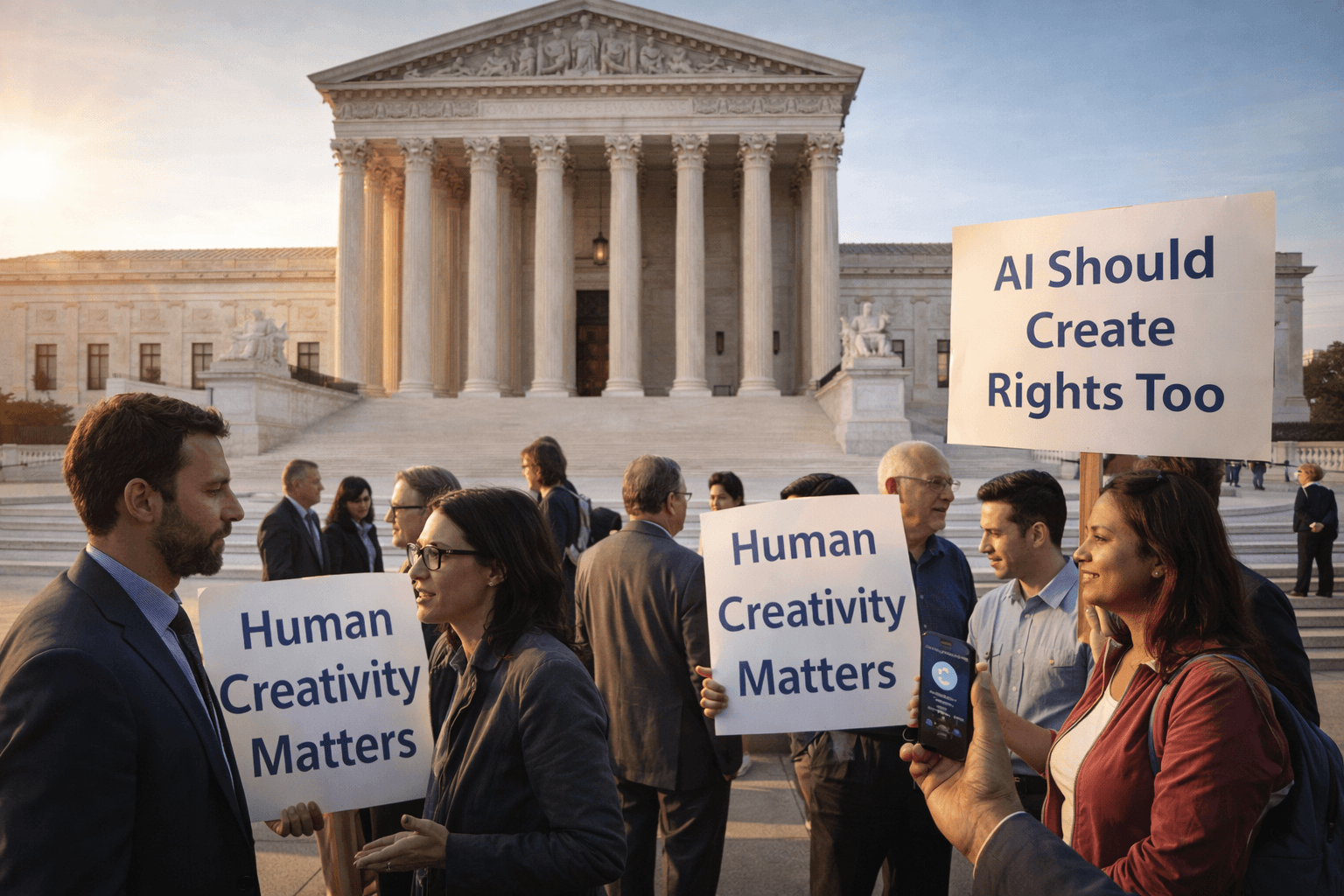
In a significant decision on 2 March 2026, the US Supreme Court declined to hear a legal dispute over whether works generated entirely by artificial intelligence can be protected by copyright under US law. This refusal leaves intact existing interpretations from lower courts and the US Copyright Office that require “human authorship” for creative works to qualify for copyright protection. The case concerned visual artwork produced by an AI system and raised profound questions about the intersection of law, technology, and creative expression.
The case originated when Stephen Thaler, a computer scientist from Missouri, sought federal copyright registration for a piece of visual art titled A Recent Entrance to Paradise, which he argued was autonomously created by his AI system named DABUS. The US Copyright Office rejected the application in 2022 on the basis that copyright law only protects works with human authors, a position upheld by a federal judge in Washington in 2023 and later by the US Court of Appeals for the District of Columbia Circuit in 2025.
What the Supreme Court Decision Means
The Supreme Court’s choice not to review the case known as a denial of certiorari does not represent a ruling on the merits of AI copyrights itself. Rather, it means that the legal understanding developed in prior rulings will remain in force. Because the highest court did not take up the dispute, the appeals court’s interpretation stands: a creative work must have a human author to be eligible for copyright protection.
The Copyright Office maintains that the Copyright Act presumes human authorship because it ties copyright ownership to human creators. Elements of the law such as copyright duration being linked to an author’s lifetime, and termination rights that benefit heirs cannot logically apply to non-human entities like machines, according to government filings supporting the decision.
Legal experts and industry observers have described this outcome as a reaffirmation of the traditional legal framework at a time when artificial intelligence is rapidly reshaping creative industries. Some contend that the courts’ insistence on human authorship ensures that intellectual property rights remain anchored in human creativity, while others fear it could limit incentives for developers working with generative AI technologies.
Background: Human Authorship and AI in Law
Under US copyright law, creative works must be protected from unauthorized copying and exploitation. The Copyright Act of 1976 does not explicitly define “author,” but longstanding interpretations hold that this term refers to a human being. The Copyright Office regularly rejects applications for works it deems lacking such authorship.



-640x427.png&w=3840&q=75)

-300x200.png&w=3840&q=75)
-1-300x200.png&w=3840&q=75)
-1-300x200.png&w=3840&q=75)
-1-300x200.png&w=3840&q=75)
-300x200.png&w=3840&q=75)
-300x200.png&w=3840&q=75)
-300x200.png&w=3840&q=75)
-300x200.png&w=3840&q=75)