The future of money is being decided now
In recent months the role of cryptocurrency and blockchain technology has moved into the spotlight in U.S. political and economic conversations. What was once dismissed by Donald Trump as “not money” has become a topic embraced by parts of his administration and by many in the broader financial community.
Although the 2025 National Security Strategy did not prioritise crypto technology in its formal text, other official acts show that the U.S. government under Trump has taken steps to support the growth of the crypto industry. For example, an executive order was signed in January 2025 to strengthen the United States’ leadership in digital financial technology. That order directed federal efforts toward developing clear rules for digital assets rather than promoting a central bank digital currency.
Trump has also supported the idea of creating a national crypto reserve a government stockpile of Bitcoin and other major digital assets as a complement to U.S. dollar-based financial strategy. This proposal, which has been discussed by policymakers and industry backers, is intended to position the U.S. at the forefront of global digital finance.
Some in the crypto world have welcomed these moves, saying the U.S. should lead in financial innovation and digital assets. Others have raised concerns about transparency conflict of interest and the potential for political influence given the Trump family’s business interests in crypto and stablecoins.
The Mar a Lago Forum What It Is and Who Will Attend
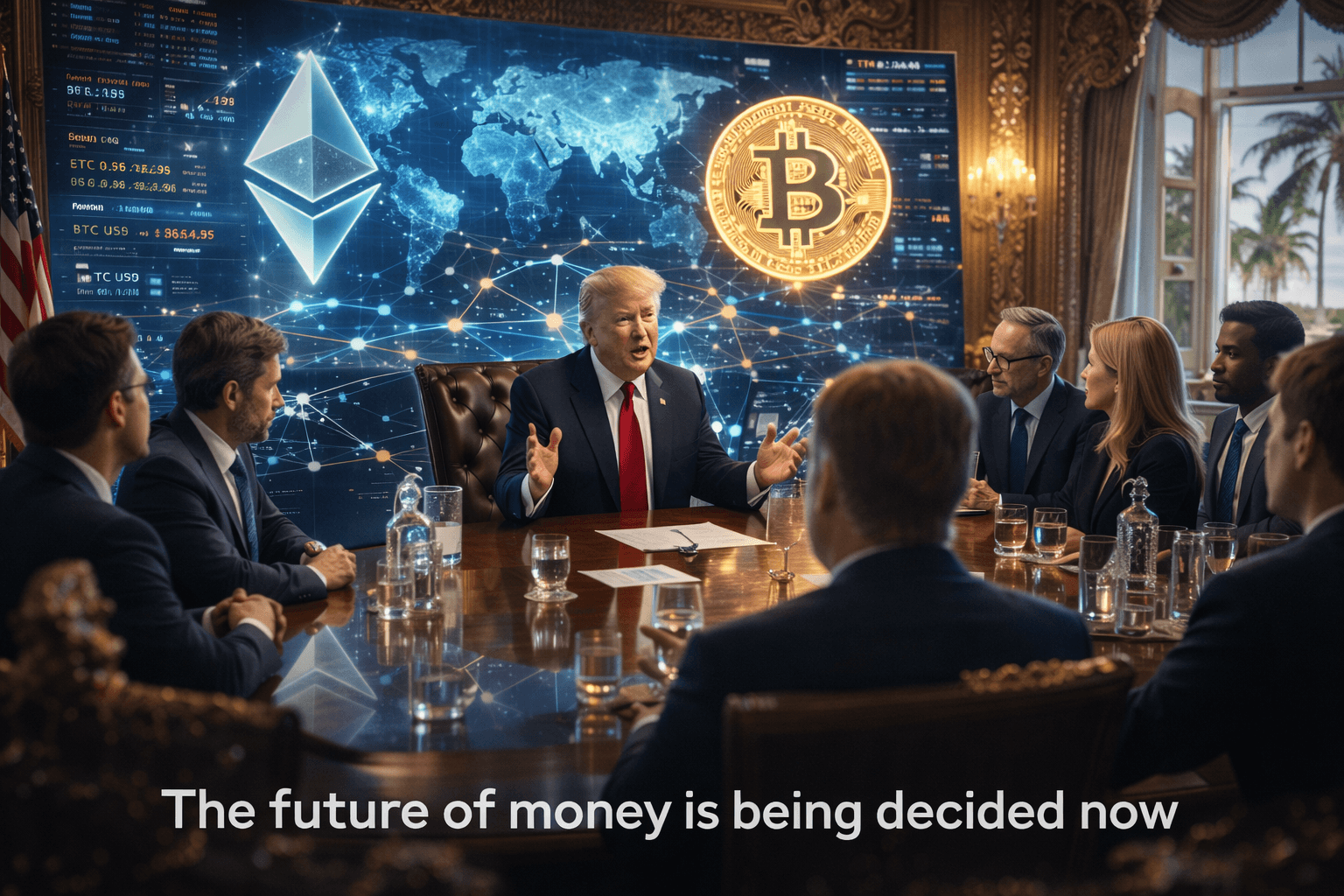
Recently it was announced that World Liberty Financial a firm closely linked with the Trump family’s business interests will host an inaugural World Liberty Forum on February 18, 2026 at Mar-a-Lago in Florida. This event is planned as a major gathering that brings together leaders in finance technology regulation and investment to discuss the future of global money crypto and financial innovation.
The forum aims to explore topics including:
Digital assets and blockchain technology’s role in global markets,
Regulatory policy challenges and frameworks for innovation,
Geopolitical shifts in financial systems,
The relationship between traditional finance and new distributed technologies.
Reported attendees include executives from major financial firms and regulators such as CEOs from traditional investment institutions and leaders from U.S. financial regulatory agencies along with fintech and crypto industry experts.



-1-640x427.png&w=3840&q=75)