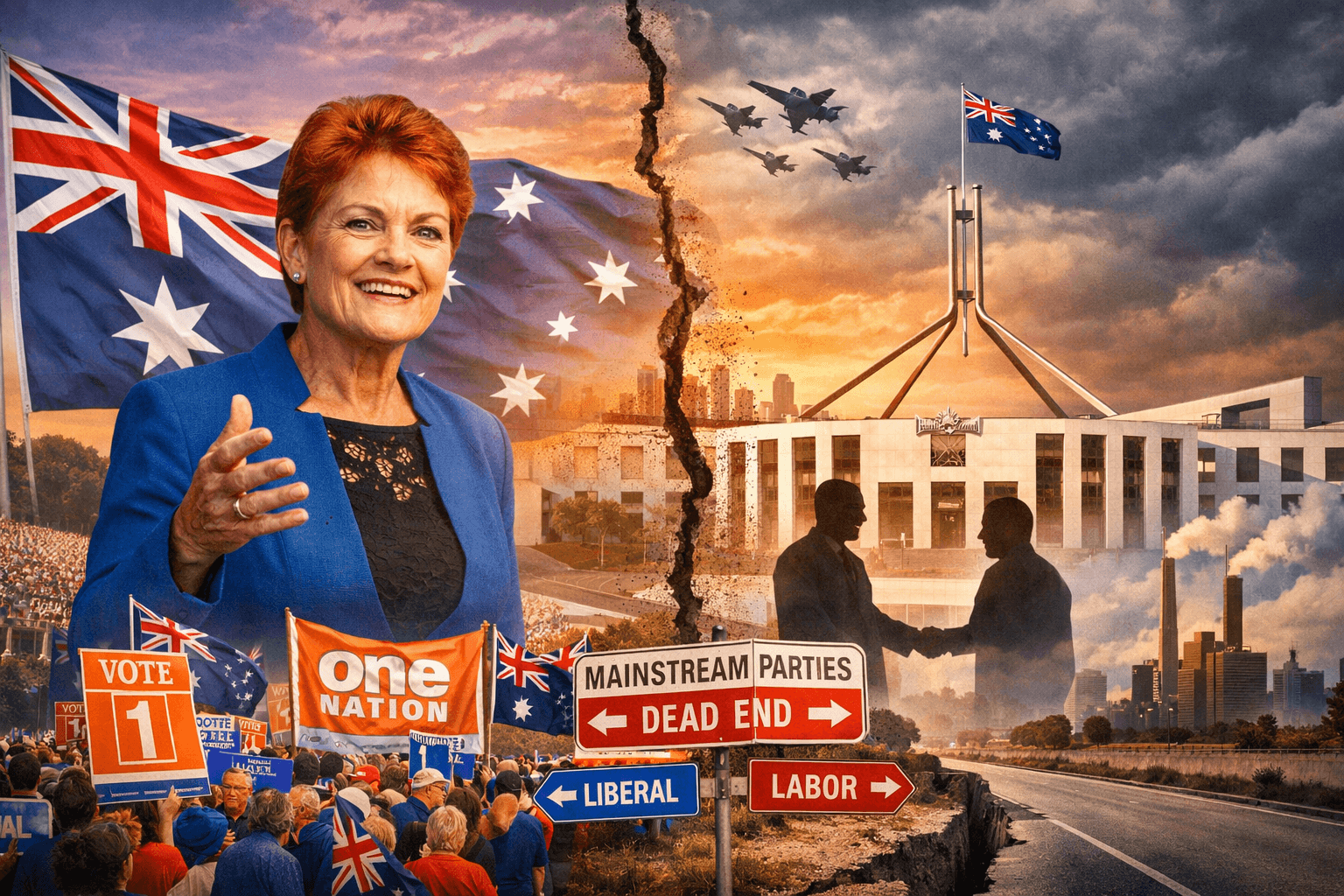
A protest vote just turned into a structural threat.
Saturday’s South Australian election delivered a comfortable win for the government, but that’s not the bit likely to keep political strategists up at night. The real story was the collapse of the traditional conservative vote and the rise of a harder-edged challenger that didn’t just hoover up protest support on the fringe, but turned discontent into proper electoral muscle. The election was held on 21 March 2026, and the official election information page confirms the key timetable and polling day date. That matters because this wasn’t just a bad night for the opposition.
It looked a lot more like a warning shot
Analysis published after the vote argued that the conservative party had not only been outpolled by its insurgent rival, but had become stuck in contradictory explanations for its own decline. That is usually a sign a party has moved beyond a temporary setback and into a full-blown identity crisis. When a political movement can’t even agree on why it is losing, it usually has no clear road back.
The pre-election warning signs were already there
The signs were there before a single vote was counted. A poll published in the final week of the campaign had Labor on 38% of the primary vote, the Liberals on 19%, and One Nation on 22%, with Peter Malinauskas well ahead as preferred premier. That wasn’t just a bit of softening in opposition support. It pointed to a conservative brand being overtaken by a party that has long been treated as a pressure outfit rather than a governing force, then election night made the danger impossible to ignore.
Post-election reporting said One Nation secured about 22% of the statewide primary vote, ahead of the Liberals on roughly 19%, while Labor remained well in front overall on about 38%. One Nation was reported to have won at least one lower-house seat and to be competitive in several more, with some outlets projecting a bloc of four to six seats in the 47-seat House of Assembly if preferences and counting broke its way.
Even if those seat projections move around as the count continues, the underlying point is already obvious: the conservative vote has fractured badly enough that the old opposition can no longer assume it is the natural home for anti-government anger.
That is the real political earthquake here
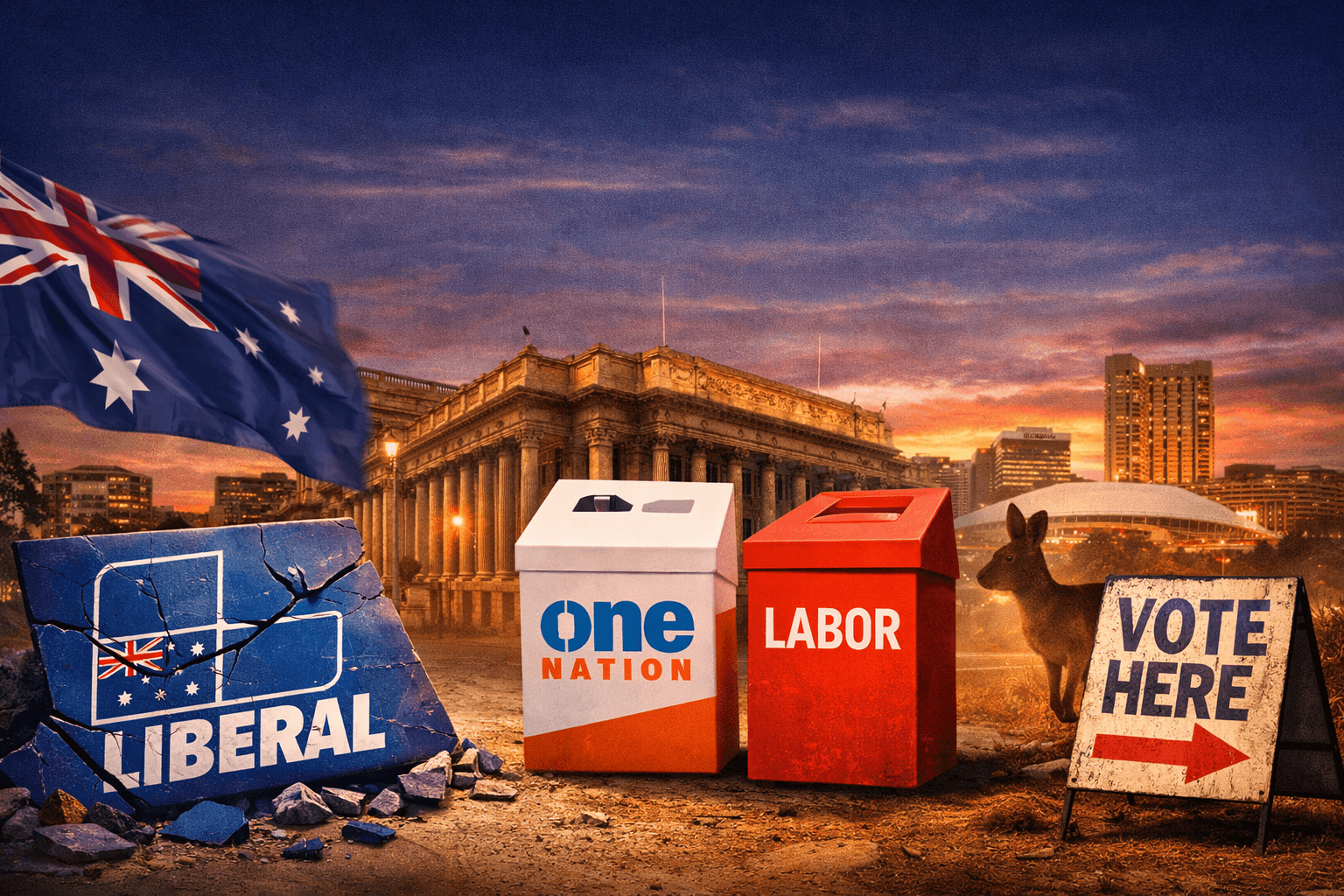
For years, the standard assumption in Australian politics was that protest parties could make noise, but the major parties would still control the main game. South Australia now looks like a warning that this assumption is breaking down. The conservative vote is no longer just leaking around the edges,It is splintering across regional seats, outer suburbs, independents and a more populist alternative willing to paint both major parties as part of the same stale machine, and that creates a much bigger problem than one ugly election result.



-1-640x427.png&w=3840&q=75)
-300x200.png&w=3840&q=75)

-300x200.png&w=3840&q=75)