The concern around AI sameness has real research behind it
A opinion, AI “hive mind” is forming and that it is making people dumber. The headline is provocative, but the underlying issue is not invented. There is credible research behind the fear that large language models can flatten originality, recycle dominant patterns, and reinforce the same kinds of answers over time. What is less clear is whether that process is already making humans cognitively weaker in any measurable, settled way.
That distinction matters.
So the strongest version of this story is not “science proves AI is making us dumber.” The stronger, more defensible version is this, researchers are increasingly warning that AI can homogenize outputs, reduce diversity in generated content, and create feedback loops if synthetic content keeps feeding future models.
At the center of the debate is a now widely cited 2024 Nature paper on “model collapse.” The paper found that when generative models are trained recursively on their own outputs, they can begin to lose information about the real world, especially rare or less common patterns. Over time, that can produce degraded, narrower, and less faithful outputs. Nature’s coverage of the issue put it more plainly: too much AI-generated data in training pipelines can make models forget the unusual edges of reality.
That is one half of the AI hive mind problem.
The other half is what happens on the user side. A 2025 open-access study in Computers in Human Behavior: Artificial Humans examined the “homogenizing effect” of large language models on creative diversity. The researchers found that while AI assistance could improve the novelty of writing for individual users, widespread use of the same systems risked reducing the collective diversity of ideas. In plain English: AI may help one person sound better, while making everyone sound a bit more alike.
That is where the hive mind language starts to make sense.
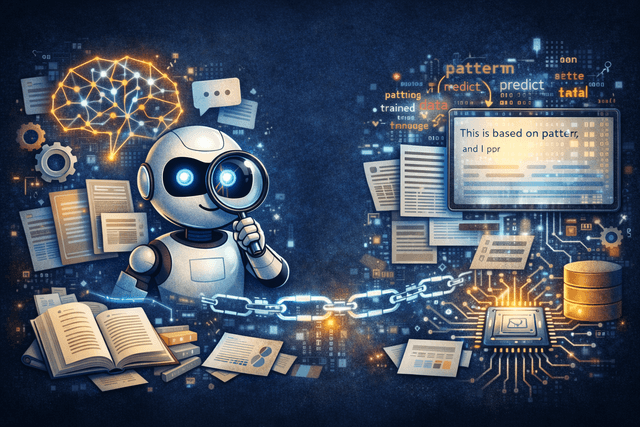
Large language models are built to predict likely continuations from enormous datasets. That makes them powerful, but it also makes them pattern-seeking machines. They often converge on fluent, plausible, highly repeatable answers. That can be useful when the goal is speed, summarization, or consistency. It becomes less useful when the goal is originality, dissent, edge-case thinking, or genuinely new synthesis. The risk is not that every model says the exact same thing every time. The risk is that they increasingly orbit the same center of gravity.



-1-640x427.png&w=3840&q=75)

-1-300x200.png&w=3840&q=75)
-1-300x200.png&w=3840&q=75)
-300x200.png&w=3840&q=75)
-300x200.png&w=3840&q=75)
-300x200.png&w=3840&q=75)
-300x200.png&w=3840&q=75)
-1-300x200.png&w=3840&q=75)

-1-300x200.png&w=3840&q=75)