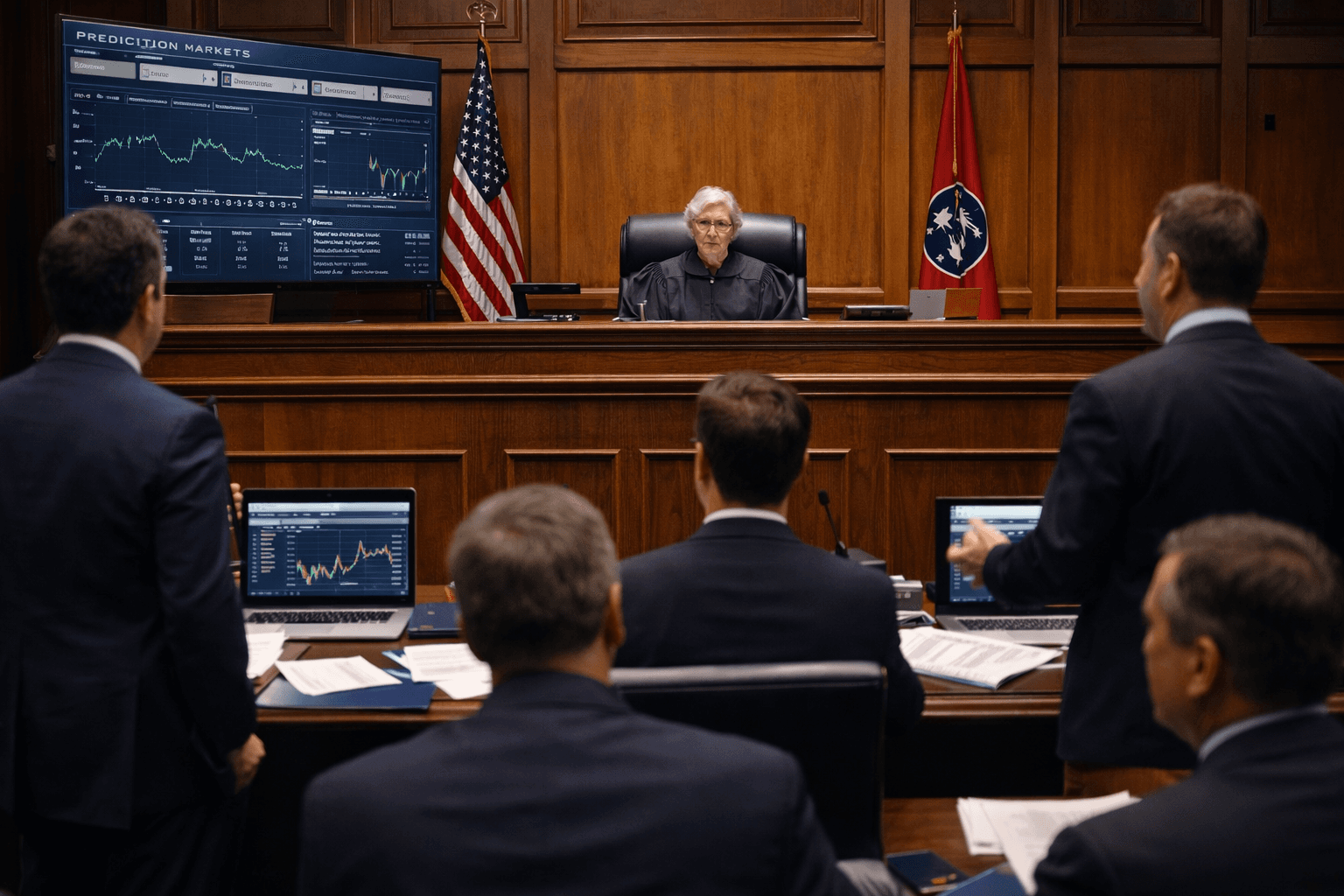
In early January 2026 the state of Tennessee set off a major legal and regulatory dispute that could shape the future of prediction markets across the United States. The state’s Sports Wagering Council (SWC) issued cease-and-desist orders to three prominent platforms Kalshi, Polymarket, and Crypto.com’s prediction market services — demanding they immediately stop offering sports-related event contracts to Tennessee residents and refund all customer funds by January 31 2026. Tennessee regulators argue that these contracts function as unlicensed sports betting under state law and pose risks to consumers and public safety.
This action has since snowballed into a high-stakes legal confrontation over who regulates prediction markets in America: federal authorities through the Commodity Futures Trading Commission (CFTC) or individual states via their gambling laws. The dispute highlights fundamental questions about the nature of event-based contracts how they are treated under US law and how far states can go when federal oversight exists.
A State Takes Aim at Prediction Markets
On January 9 2026 the Tennessee SWC sent formal regulatory letters to Kalshi Polymarket and Crypto.com ordering them to halt the offering of sports event contracts to people located in Tennessee. The letters assert that these platforms are operating unlicensed sports betting businesses and in violation of the Tennessee Sports Gaming Act which mandates licensing for all entities accepting wagers on sporting events. Regulators warned that failure to comply could lead to escalating civil penalties potential criminal action and the forced refund of all customer deposits by the end of January.
The language in the cease and desist orders was direct: the platforms’ contracts are not compliant with state consumer protection requirements and pose “an immediate and significant threat to the public interest of Tennessee” if they remain available without appropriate gambling licenses. Tennessee regulators pointed to issues such as underage betting inadequate player protections and shortfalls in anti money laundering controls that they say distinguish prediction markets from federally regulated financial derivatives.
For Kalshi Polymarket and Crypto.com this represented yet another state enforcement action following similar moves in states such as Nevada Arizona Illinois Maryland and New Jersey where regulators previously challenged their operations. Some previous rulings have sided with states classifying these contracts as gambling while others have been less decisive leaving considerable legal uncertainty.


-640x427.png&w=3840&q=75)
-3-640x427.png&w=3840&q=75)