What It Is What It Includes and Why It Matters
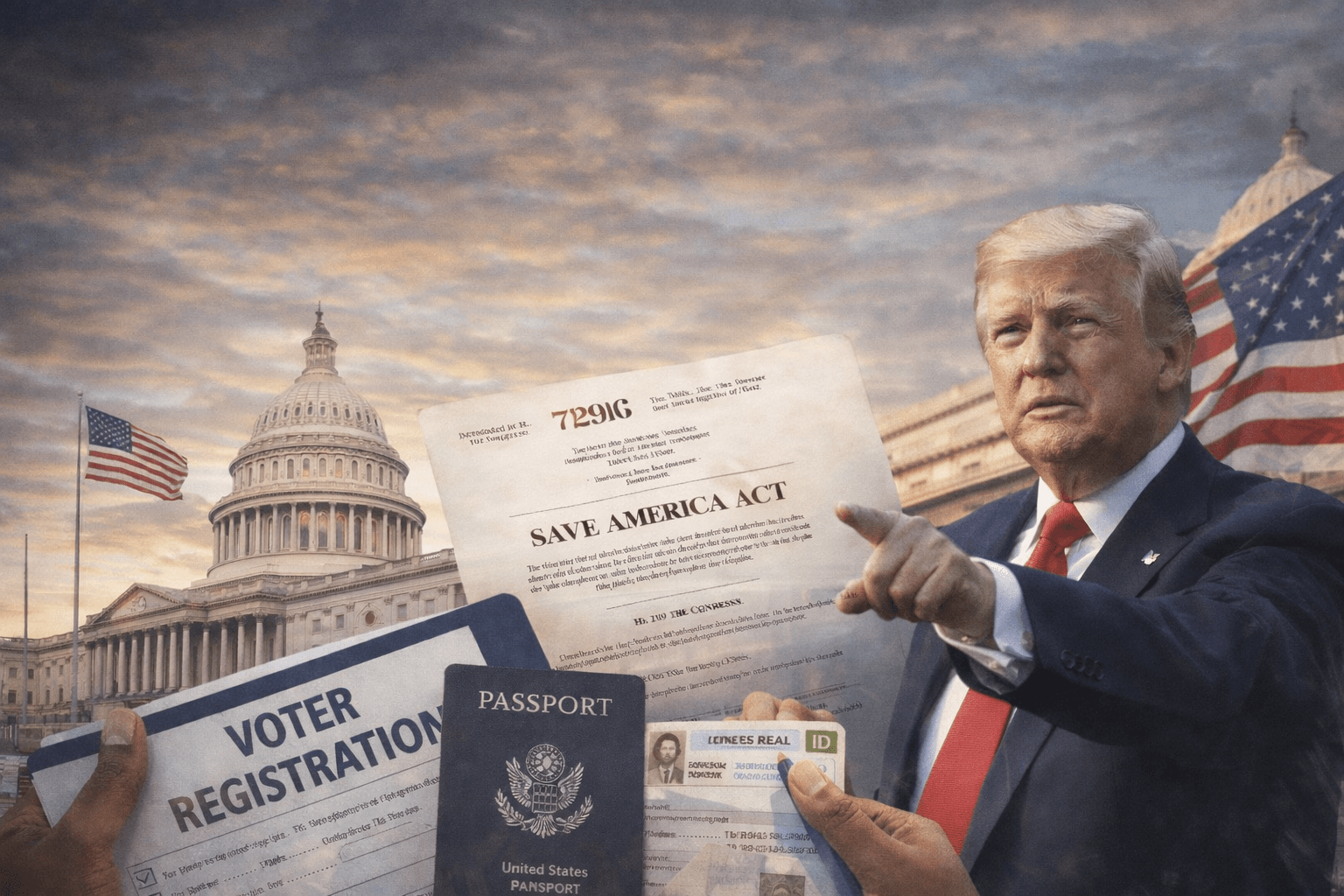
In early 2026, a new piece of legislation known as the SAVE America Act emerged as a central focus of U.S. political debate, partly because of backing from former President Donald Trump and its connection to broader calls for federalizing aspects of election law. While the bill does not make sweeping changes to how elections are run, it is designed to alter fundamental voter registration rules and has become a flashpoint in discussions about election integrity, voting rights, and federal versus state control of election administration.
What the SAVE America Act Is and Where It Came From
The SAVE America Act, formally designated H.R. 7296 in the 119th U.S. Congress, was introduced on January 30, 2026. It amends an older federal law the National Voter Registration Act of 1993 with the goal of tightening requirements on who can register to vote in federal elections. In legislative text, it is also referred to as the Safeguard American Voter Eligibility Act.
The bill gained renewed attention in early February 2026 after Trump publicly endorsed it and tied it to broader demands around nationalizing certain aspects of election law ahead of the 2026 midterm elections. Supporters frame the bill as a measure to ensure election integrity; critics warn that it could create new barriers to voting.
The debate reflects larger disagreements between political parties and advocacy groups about how to balance preventing fraud and protecting access to the ballot. While Trump and his allies argue measures like the SAVE America Act are necessary for confidence in elections, opponents see them as possible voter suppression tools.
Key Provisions of the Bill
At its core, the SAVE America Act changes the requirements for voter registration in federal elections. Here are the main elements:
Proof of Citizenship Required to Register
Under the bill, proof of U.S. citizenship becomes mandatory for anyone trying to register to vote in a federal election. That includes:
Presenting documentary proof with the registration application.
Providing citizenship evidence in person if originally registered by mail.
Acceptable documentation could include U.S. passports, REAL ID-compliant driver’s licenses showing citizenship, birth certificates with matching identification, or U.S. naturalization certificates.
This represents a change from current federal law, where citizenship is generally affirmed by signing a statement on the voter registration form rather than requiring documentary evidence.


-640x427.png&w=3840&q=75)

-1-300x200.png&w=3840&q=75)
-1-300x200.png&w=3840&q=75)