A Deep Look at How States Are Taking on Crypto-Linked Prediction Markets
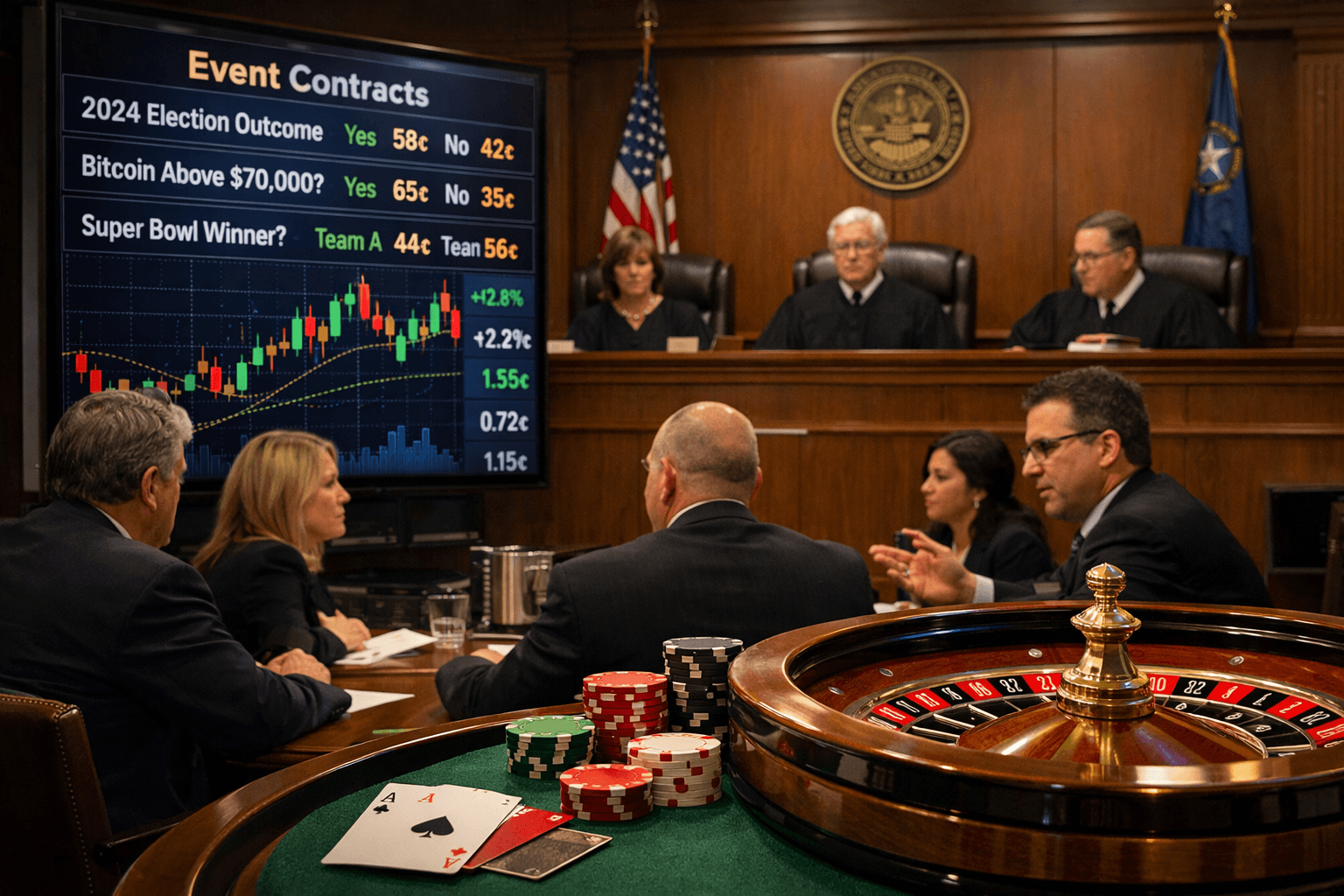
The world of crypto and financial innovation is once again colliding with established law and regulation, this time in the U.S. state of Nevada. Recently, Nevada regulators moved to block Coinbase from offering its new prediction markets product in the state, arguing that the contracts the platform offers should be treated as unlicensed gambling rather than legitimate trading instruments. This action comes on the heels of a high-profile dispute with Polymarket, another major prediction market operator that was temporarily barred from offering event contracts to Nevada residents by a state court ruling.
Prediction markets enable participants to buy and sell contracts tied to future outcomes. These can range from election results and sporting event winners to cultural or economic events. The price of a contract typically reflects the market’s collective view of the likelihood of a particular outcome, and users profit if their predictions turn out to be correct. But what should happen when the mechanics of these markets appear similar to traditional bets? That question is at the heart of the legal battle unfolding in Nevada.
What Nevada Regulators Are Arguing
Nevada’s gaming authorities, led by the Nevada Gaming Control Board, have taken Coinbase to court, asserting that the exchange’s event-based contracts, including those tied to sports and political outcomes, qualify as gambling under state law. The regulators claim that these prediction markets operate like wagering, require licensing under Nevada’s stringent gambling statutes, and should be subject to the same protections and restrictions that govern casinos, sportsbooks, and bookmakers in the state.
The regulators also pointed out that Coinbase allows users aged 18 and older to trade in these markets, which they argue conflicts with Nevada’s legal gambling age of 21. They have requested injunctive relief and a permanent halt to the offering of these prediction contracts unless and until Coinbase obtains appropriate licensing.
Coinbase’s Position and Broader Legal Context
Coinbase, on the other hand, maintains that its prediction market offering should fall under federal oversight specifically the jurisdiction of the Commodity Futures Trading Commission (CFTC). The exchange launched access to these markets through a partnership with Kalshi, a CFTC-regulated event contract market, and argues that these products are exchange-traded derivatives rather than traditional gambling instruments. In doing so, Coinbase says it is operating within a regulated framework meant to protect customers and ensure financial compliance.



-1-640x427.png&w=3840&q=75)