Tense talks in Washington end with deep disagreements and firm resolve from all parties
In early January a new chapter in Arctic politics unfolded at the White House as representatives from Denmark and Greenland met with senior officials of the United States government. The Biden era had already seen the Arctic gain strategic importance but the dynamics shifted dramatically when President Donald Trump renewed assertive calls for the United States to gain control over Greenland. The island known for its vast ice sheet strategic location and rich natural resources became the center of intense diplomatic negotiations in Washington.
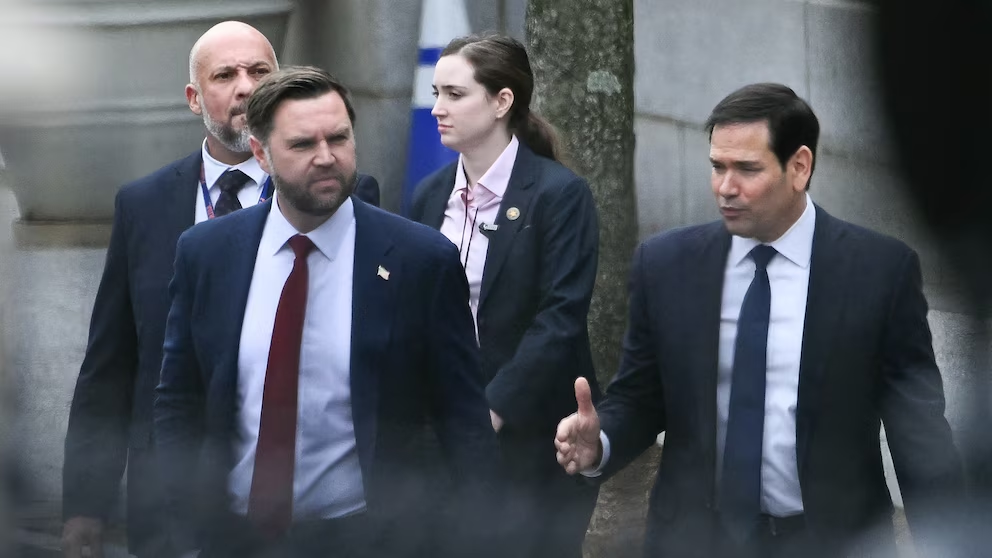
The meeting brought together U.S. Vice President JD Vance and Secretary of State Marco Rubio on one side and Danish Foreign Minister Lars Løkke Rasmussen and Greenland’s Foreign Minister Vivian Motzfeldt on the other. The discussion came amid rising tensions between the United States and its long time ally. This meeting aimed to clarify positions and explore ways forward but instead exposed fundamental disagreements that could shape the future of the Arctic region in the years ahead.
At the center of the dispute was President Trump’s insistence that Greenland must come under U.S. control as a matter of national security. Trump and his supporters cited the perceived threat posed by Russia and China in the Arctic and called for the U.S. to position itself more firmly in the region. Trump described Greenland as vital for a new missile defense infrastructure and asserted that the United States must not allow other powers to gain influence over the island’s territory and resources.
However Prime Minister Mette Frederiksen of Denmark and Greenland’s leaders stood united in opposition to any suggestion that Greenland was for sale or that its fate could be decided by a foreign power. Before the meeting Greenland’s prime minister articulated a firm stance declaring that Greenland would remain part of the Kingdom of Denmark and signaling that the island’s allegiance was clear. This show of unity sent a strong message ahead of the high level talks in Washington.
When officials gathered in the White House complex they faced a stark reality. Both sides acknowledged the importance of Arctic security yet they diverged sharply on how that security should be achieved. The Danish and Greenlandic ministers reiterated that Greenland’s right to self determination and its status as part of the Danish realm must be respected. They stressed that any attempt at U.S. ownership or forced transfer of control was unacceptable and contrary to international law.



-1-640x427.png&w=3840&q=75)
-300x200.png&w=3840&q=75)

-300x200.png&w=3840&q=75)