There was a time when science moved slowly. A researcher would form a hypothesis, design an experiment, run it by hand, wait for results, and then repeat the process again and again. It could take months, sometimes years, to move from idea to breakthrough. That pace is now being torn apart.
Artificial intelligence is no longer just helping scientists think. It is starting to design, run, and refine experiments on its own. In some cases, AI systems are now capable of running tens of thousands of biological experiments without direct human involvement. That is not a small step forward. That is a complete shift in how science itself operates.
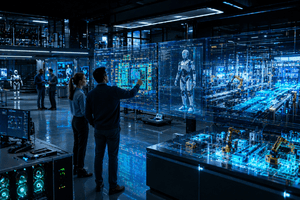
Recent developments show that AI models, working with robotic cloud laboratories, can design experiments, execute them through automated systems, analyse the results, and immediately feed that information back into the next round of experiments. Humans still set the goal, but the loop of discovery is increasingly handled by machines.
This is what many are now calling programmable biology. And while it promises enormous benefits, it also opens the door to risks that humanity is not yet prepared to handle.
From Slow Science to Machine Speed Discovery
To understand how big this shift is, you have to look at how biology has evolved over time. For decades, biology was about observation and understanding. Scientists mapped genomes, studied cells, and slowly pieced together how life worked. Then came tools like CRISPR, which allowed scientists to edit DNA directly. Now we are entering a third phase. AI is turning biology into something closer to engineering.
Instead of manually testing one idea at a time, AI systems can generate thousands of experimental variations, simulate likely outcomes, and then physically test them using robotic labs. The process becomes a closed loop. Design, build, test, learn, repeat.
The scale is staggering. One recent example showed an AI system designing and running 36,000 biological experiments through a robotic lab setup. That kind of throughput would take human teams years to complete.
This changes everything. Drug discovery becomes faster. Vaccine development can accelerate. Protein engineering becomes cheaper and more precise. AI can predict which biological designs are most likely to work before they are ever physically tested, dramatically reducing trial and error.
For medicine, this is potentially life changing. Faster responses to disease. Cheaper treatments. New therapies that were previously too complex to explore. But speed cuts both ways.


.png&w=3840&q=75)
-1-640x427.png&w=3840&q=75)
-1-300x200.png&w=3840&q=75)
-1-300x200.png&w=3840&q=75)
-300x200.png&w=3840&q=75)
-300x200.png&w=3840&q=75)
-300x200.png&w=3840&q=75)
-300x200.png&w=3840&q=75)
-1-300x200.png&w=3840&q=75)
-1-300x200.png&w=3840&q=75)