nhs england youth hormone pause gender care fight
The NHS did not just tweak guidance. It moved the centre of gravity again
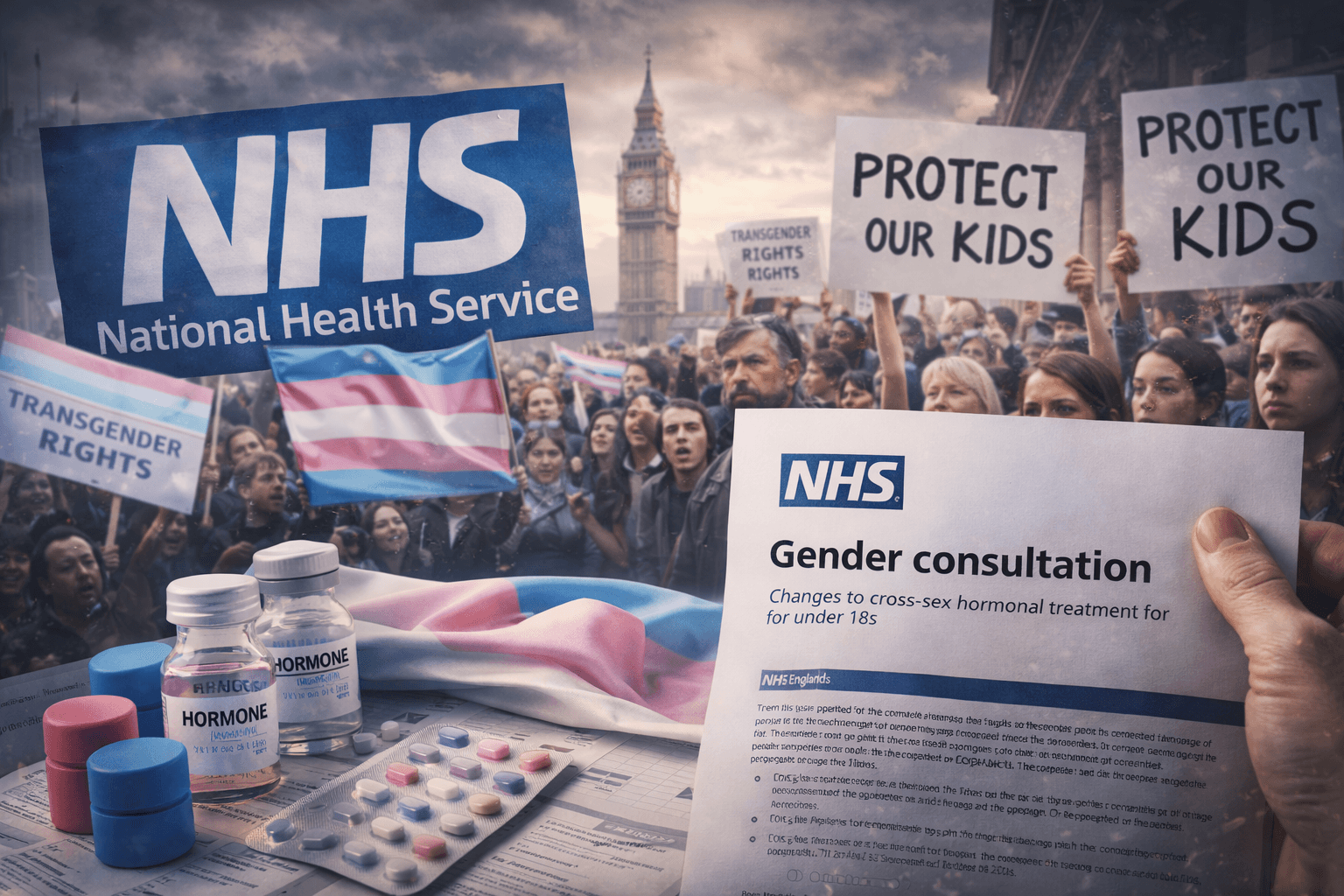
Britain’s argument over youth gender medicine just got even more combustible. NHS England has opened a 90 day consultation on a revised policy that would make masculinising and feminising hormones unavailable as a routine commissioning option for under-18s through its Children and Young People’s Gender Service. The consultation runs from 9 March to 7 June 2026, and the draft policy says the treatment is “not recommended to be available as a routine commissioning option” because NHS England concluded there is not enough evidence on safety and clinical effectiveness to support routine use.
That is a major change in practical terms. Under the previous policy, some 16- and 17-year-olds could still be referred for hormone treatment under strict conditions, including national multidisciplinary review. Under the new draft, those new referrals would stop. NHS England says young people already receiving these prescriptions may continue, but only with case-by-case review and shared decision-making with clinicians and families where appropriate.
The linked opinion piece argues the NHS has not gone far enough. That is one political reading. But the harder factual point is this: NHS England is already moving far beyond a symbolic pause. It is consulting on whether to remove routine access altogether for minors in this service. That means the real fight is no longer about whether the system is becoming more restrictive. It already is. The fight is now about whether this is a necessary evidence-based reset or an overcorrection that will deny care to young people who say it helps them.
Why NHS England says it is doing this
NHS England’s case rests on evidence, or what it says is the lack of it. In the consultation guide, it says NICE found very limited evidence in 2021 about the safety, risks, benefits, and outcomes of these hormones in under-18s, and that a further independent review commissioned in 2025 found “very limited and weak evidence” to support continued access for children and young people under 18. NHS England says that, after considering those reviews, it concluded there is not enough evidence to support routine prescribing going forward.
That language matters because it mirrors the wider post-Cass direction of travel in England. The Cass Review, commissioned by NHS England and published in 2024, concluded that the evidence base around paediatric gender medicine was weak and recommended a more cautious, holistic model of care. Reuters reported at the time that Cass described the evidence around youth gender care as “remarkably weak.” NHS England’s current approach is explicitly framed as part of implementing those recommendations.



-640x427.png&w=3840&q=75)
-300x200.png&w=3840&q=75)