A nation at a crossroads as Japan votes to redefine its future
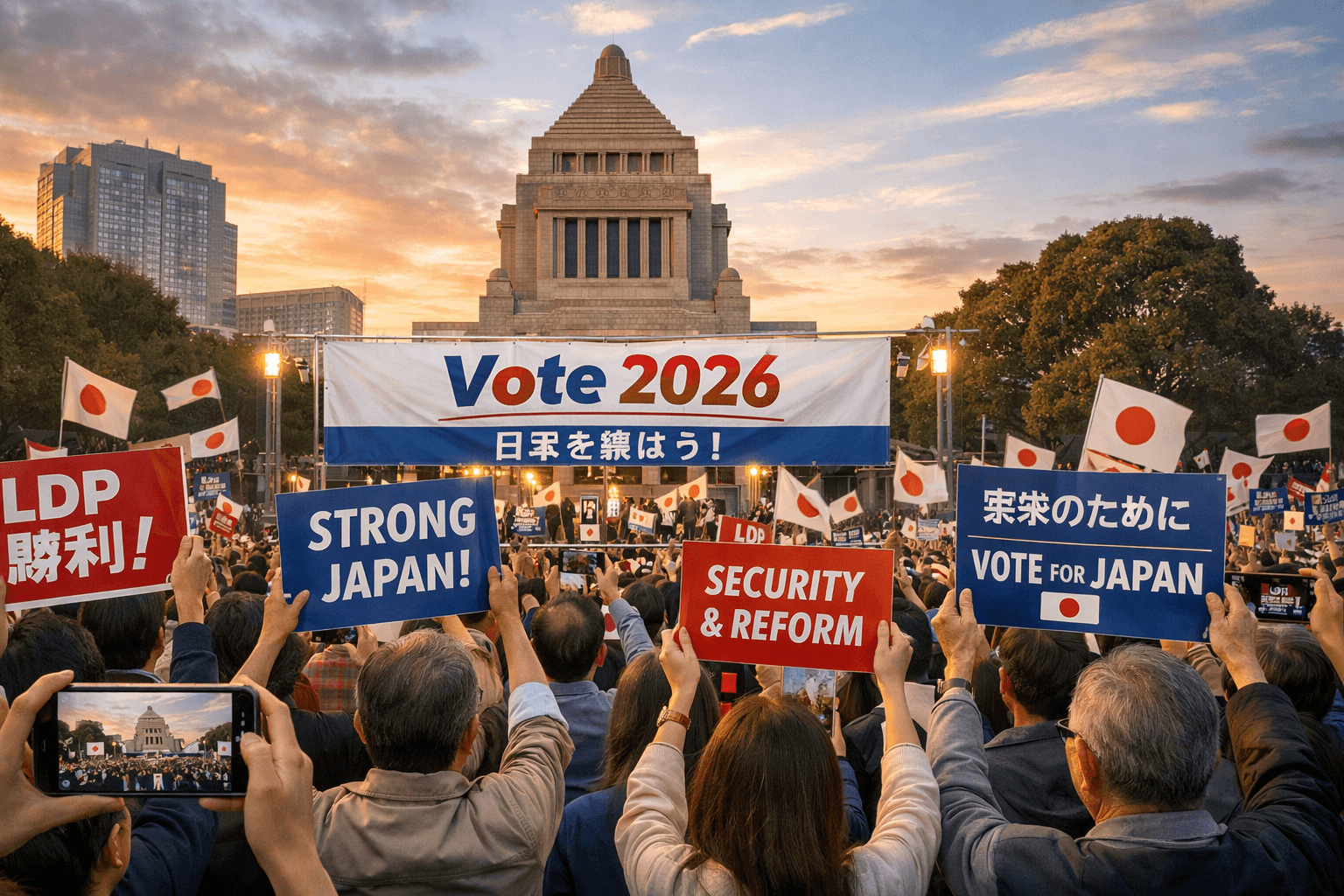
Japan has always balanced its rich tradition with the demands of global leadership, but rarely has the world looked so intently at Tokyo’s political dynamics as it did in early 2026. In January of that year, Prime Minister Sanae Takaichi called a snap general election for February 8 a bold move that reshaped the nation’s political landscape, highlighted deep currents in Japanese society, and signaled changes in foreign policy, national security, and economic strategy that will reverberate for years.
Japan’s elections usually follow a steady rhythm, but this one was different. Prime Minister Takaichi, the first woman to lead the country’s government, opted to dissolve the lower house of the Diet early, setting fresh elections just weeks after the regular session began. The decision was widely covered in Japanese media, sparking both public debate and international attention. Observers saw her gamble as an attempt to secure a stronger mandate for her policy agenda at a moment of rising geopolitical tension and domestic economic uncertainty.
At the heart of this election was a fundamental question: What should Japan’s role be in a world of shifting alliances, aggressive neighbors, and renewed emphasis on national defense? Under Takaichi’s leadership, the ruling Liberal Democratic Party (LDP) campaigned on a platform of economic revitalization, greater self-defense capability, and constitutional reassessment particularly the decades old postwar pacifist clause that has long defined Japanese foreign policy. Many voters saw this as overdue modernization of Japanese political strategy, while others feared it risked destabilizing a carefully maintained balance in East Asia.
The news agency Jiji Press reported that political posts linking topics like national security and constitutional reform surged on social media during the campaign period, underscoring how intensely these issues resonated with the public. Online discussions about defense and constitutional revision eclipsed other topics such as consumption tax and political funding, showing a clear shift in voter priorities as the election approached.
This shift did not happen in a vacuum. The government has been vocal about perceived threats from regional dynamics, especially China’s growing military assertiveness around Taiwan and in the East China Sea. Takaichi’s earlier statements on the subject had already sparked diplomatic pushback from Beijing, highlighting how external geopolitical tensions have crept into Japanese domestic politics. The electorate, especially younger voters, seemed more willing to grapple with tough security decisions than in the past.


-640x427.png&w=3840&q=75)


-2-300x200.png&w=3840&q=75)