Understanding the geopolitical ripple effects from Gaza to Iran.
A New Chapter in Middle East Diplomacy
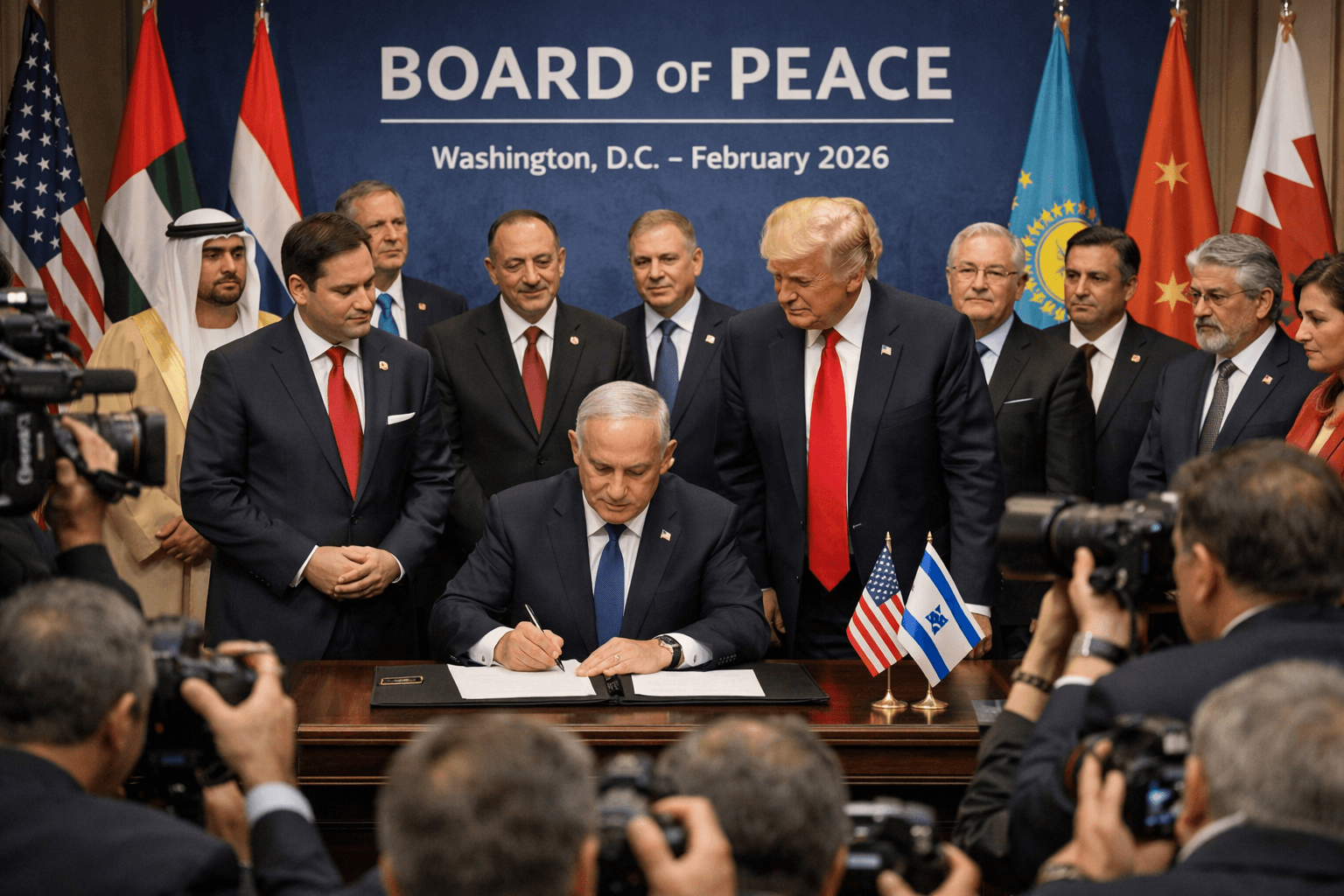
In early February 2026, Israeli Prime Minister Benjamin Netanyahu announced that **Israel has officially joined former U.S. President Donald Trump’s newly formed Board of Peace initiative, a development that marks a significant moment in the Middle East’s long and complex diplomatic history. The announcement came during Netanyahu’s visit to Washington, D.C., where he met with Trump and top U.S. officials including Secretary of State Marco Rubio. Israel’s accession was formalized with Netanyahu signing the charter ahead of a high profile meeting between the two leaders, which also included discussions on Iran and regional security concerns.
The Board of Peace is an initiative spearheaded by Trump with the stated aim of stabilizing Gaza following an uneasy ceasefire and working toward broader conflict resolution. Israel’s decision to join the board represents a deepening of cooperation with the United States on managing Gaza’s future, even as the region remains fragile and unresolved.
What Is the Board of Peace?
The Board of Peace was launched by Trump in early 2026 against the backdrop of ongoing efforts to stabilize Gaza and implement international oversight of its governance following intense conflict. It is designed to bring together a group of countries that will work collectively to supervise peace plans, support reconstruction efforts, and potentially tackle other conflicts beyond Gaza in the future. Originally established through a United Nations Security Council resolution, the board’s first formal meeting is scheduled for February 19 in Washington, where reconstruction strategies will be a key topic.
According to available reports, leaders from various nations including Argentina, Azerbaijan, Belarus, Hungary, Kazakhstan, Morocco, the United Arab Emirates, and Vietnam have also been associated with the initiative, indicating a wide if sometimes controversial participation.
The board’s mandate, as envisioned by its proponents, includes supervising Gaza’s temporary governance under the ceasefire agreement implemented in October and extending efforts to deeper peacebuilding. Supporters argue that it could provide focused international oversight where other diplomatic mechanisms have struggled. However, critics say the structure risks sidelining established multilateral institutions and bypassing Palestinian representatives in key decisions.
Israel’s Strategic Calculus


-640x427.png&w=3840&q=75)

-300x200.png&w=3840&q=75)
-300x200.png&w=3840&q=75)

-300x200.png&w=3840&q=75)