From the Terra Collapse to Tougher Standards: Why Crypto’s Experimental Era May Be Over
In December 2025, the long-running legal saga of Do Kwon, the co-founder of Terraform Labs, reached a critical moment that could reverberate across the entire cryptocurrency ecosystem. Beyond the prison sentence and the closure of one of the most notorious chapters in crypto history, the trial verdict forced a broader reckoning about the fundamental risks embedded in so-called algorithmic tokens especially those that promise price stability without traditional collateral.
Algorithmic tokens digital assets whose price mechanics depend on code-based supply adjustments or market-conditional mechanisms rather than direct backing by real assets have been among the most controversial innovations in decentralized finance (DeFi). At their best, they aimed to deliver decentralized alternatives to traditional financial instruments like stablecoins or liquidity incentives. At their worst, they operated on fragile mathematical assumptions, opaque peg models, and unproven economic safeguards. The collapse of Terra USD (UST) and its sister token LUNA in 2022, which wiped out tens of billions of dollars in value and triggered broader market contagion, was the most dramatic of these failures.
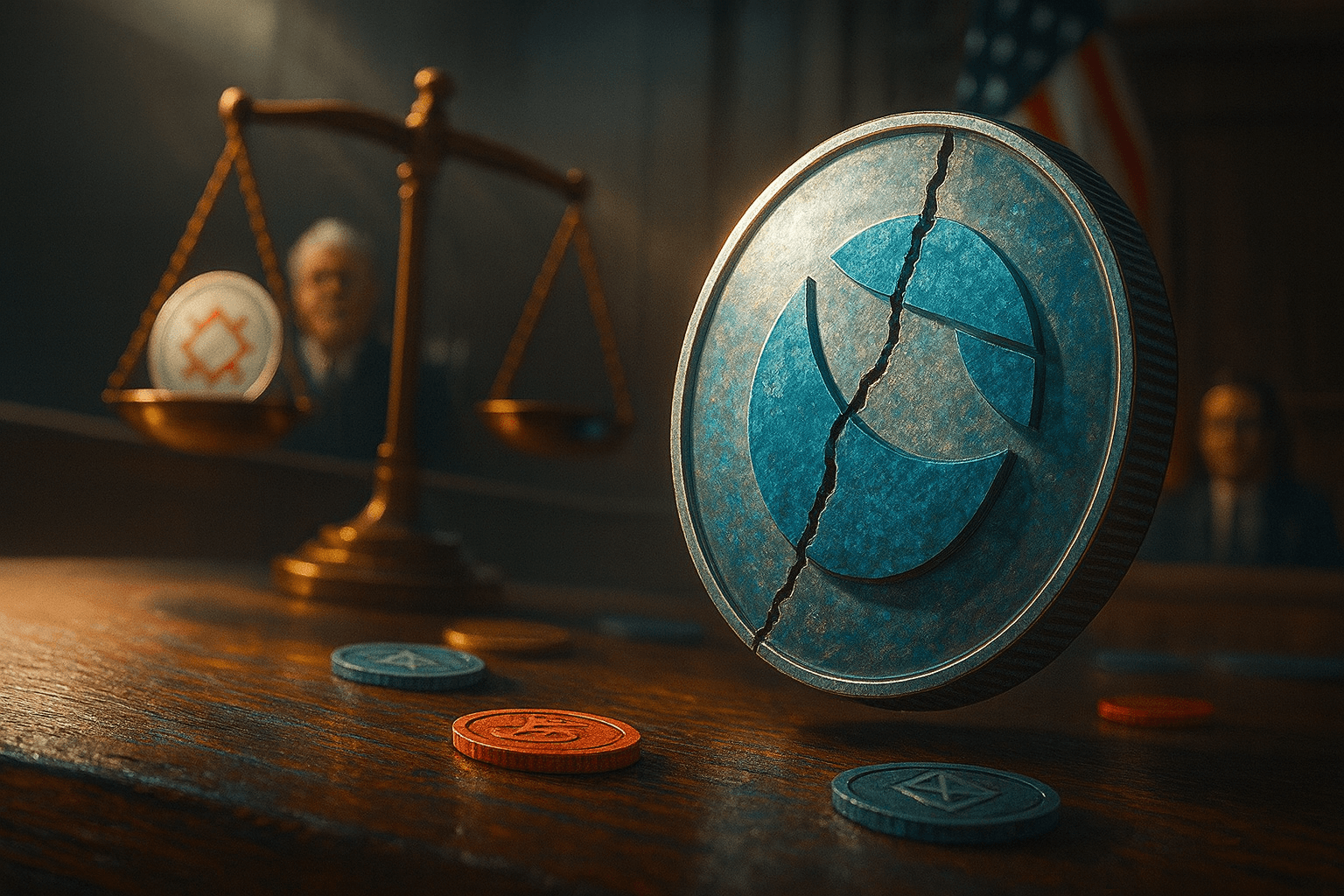
Do Kwon’s sentencing in a U.S. federal court brought these issues into sharp regulatory focus. The judge and prosecutors didn’t just punish the former Terraform Labs CEO for the billions lost in the Terra crash; they emphasized that misstatements about algorithmic stability and undisclosed dependencies on centralized market support could constitute fraud in familiar legal contexts. This framing suggests that future listing committees, insurers, and regulators will demand far greater transparency about how mechanisms work and fail before allowing similar tokens to be offered to investors.
At the core of this shift is the idea of a “truth test” a requirement that token issuers cannot simply write poetic marketing descriptions of stability mechanisms but must instead provide rigorous documentation, stress testing, and verifiable disclosures that spell out exactly how a token is expected to behave under stress. Under this emerging paradigm, the token’s whitepaper and peg model might be treated not as aspirational prose but as a contractual representation one that can be enforced in court if it proves misleading.
For exchanges and listing venues, the implications are immediate. Already, regulatory frameworks like the EU’s Markets in Crypto-Assets (MiCA) regime have imposed strict standards for stablecoin issuance, reserve transparency, and authorized issuers, forcing some tokens off regulated markets. In response to the Terra verdict, listing committees are reportedly preparing to require “kill-switch” documentation predefined conditions under which a token can be de-listed or halted if its price deviates beyond acceptable bands or if its underlying liquidity sources dry up. These requirements are the tangible embodiment of the truth test, dovetailing with MiCA-style disclosures even in jurisdictions outside the European Union.


-640x427.png&w=3840&q=75)

-300x200.png&w=3840&q=75)
-300x200.png&w=3840&q=75)