A narrative of rising safe haven demand and market turbulence
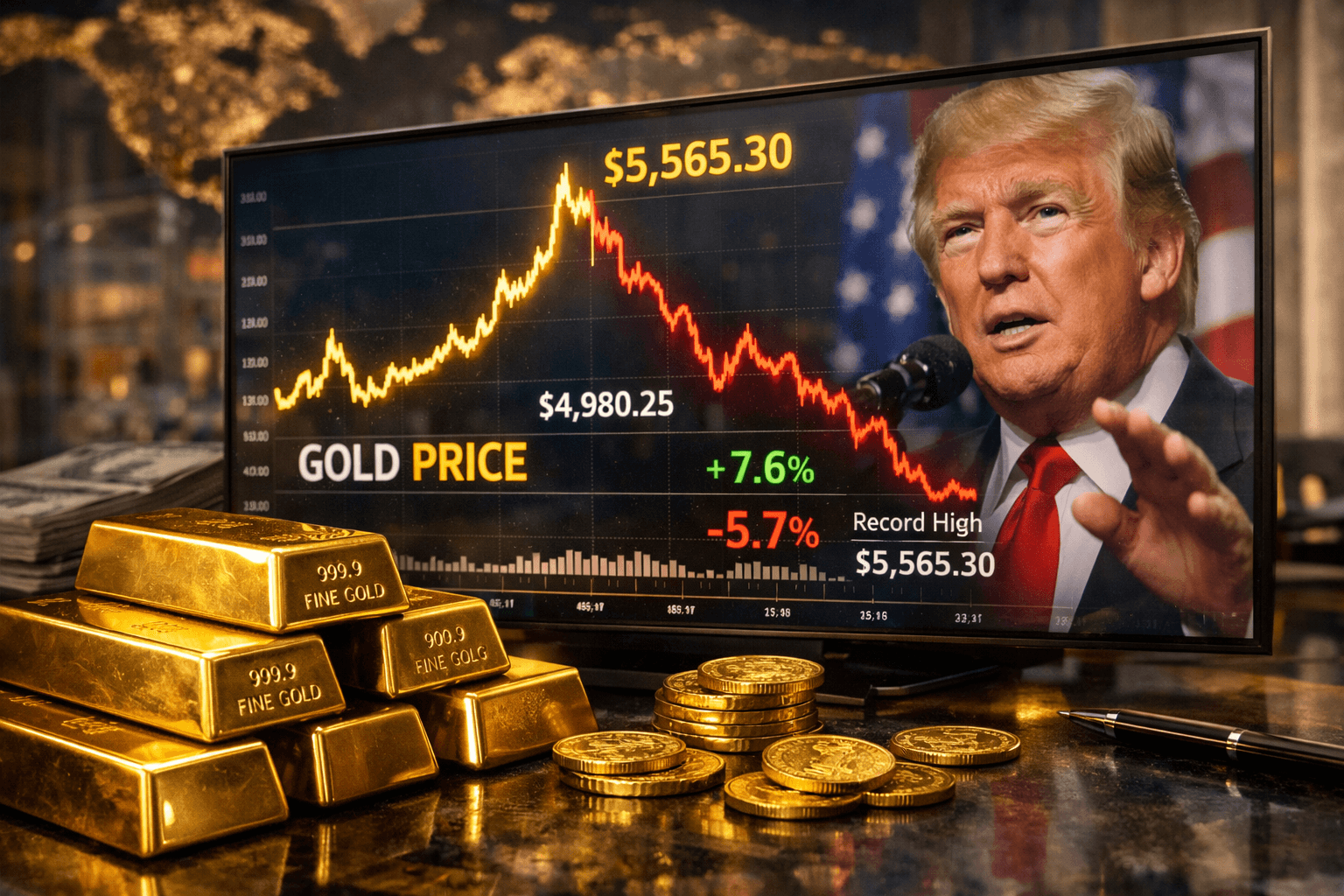
Gold has once again captured global financial headlines as its price vaulted to historic highs before experiencing sharp corrections within the same week. Over recent trading sessions gold’s spot price reached record levels above $5,500 and even pushed toward nearly $5,600 per troy ounce. This meteoric rise reflects a potent mix of safe-haven demand, geopolitical uncertainty and shifts in investor confidence, particularly linked to policy decisions and rhetoric from United States political leadership.
Investors have watched this safe haven metal for good reason. In times of market stress when confidence in equities dips or the value of major currencies like the US dollar fluctuates, gold often becomes the preferred store of value. The last week of trading in January 2026 offered a vivid example of this dynamic at work. Prices spiked as traders moved capital into gold and other precious metals, only to experience a rapid pullback as profit-taking and strengthening US currency forces emerged.
The Gold Rally That Shook Markets
Last week started with a strong uptrend in gold pricing. Data from markets shows gold crossing above major psychological barriers that had previously been considered unlikely so early in the year including passing the $5,000 mark and rapidly approaching higher territory near $5,600 per ounce. Analysts and global news wires widely noted that gold’s pace of rise far exceeded typical expectations for 2026.
This rally was partly driven by weakened confidence in the US dollar, itself influenced by political and economic signals emerging from the United States. According to reporting from the ABC and other outlets, remarks made by President Donald Trump at international forums and broader discussions regarding US policy contributed to a sense of uncertainty and reduced trust in the dollar’s stability. This weakened dollar scenario often makes gold, priced in dollars, more attractive to global buyers, lifting prices further.
At its peak mid week, gold was trading in the vicinity of all-time highs and strength in the market was not limited to gold alone. Silver and other precious metals also surged dramatically, reflecting a broad movement toward perceived safe assets.
What Caused Price Lows and Corrective Moves
Despite the strong rally early in the week, gold did not maintain its upward path indefinitely. As trading progressed, prices encountered resistance and profit-taking emerged as a predominant factor. Traders who had booked gains off the earlier rally began selling positions, exerting downward pressure on price levels. By Friday trading sessions, gold dipped below the $5,000 mark at times, registering significant declines from earlier highs.


-640x427.png&w=3840&q=75)

-2-300x200.png&w=3840&q=75)