Critics warn new legislation could tighten state control over civil society
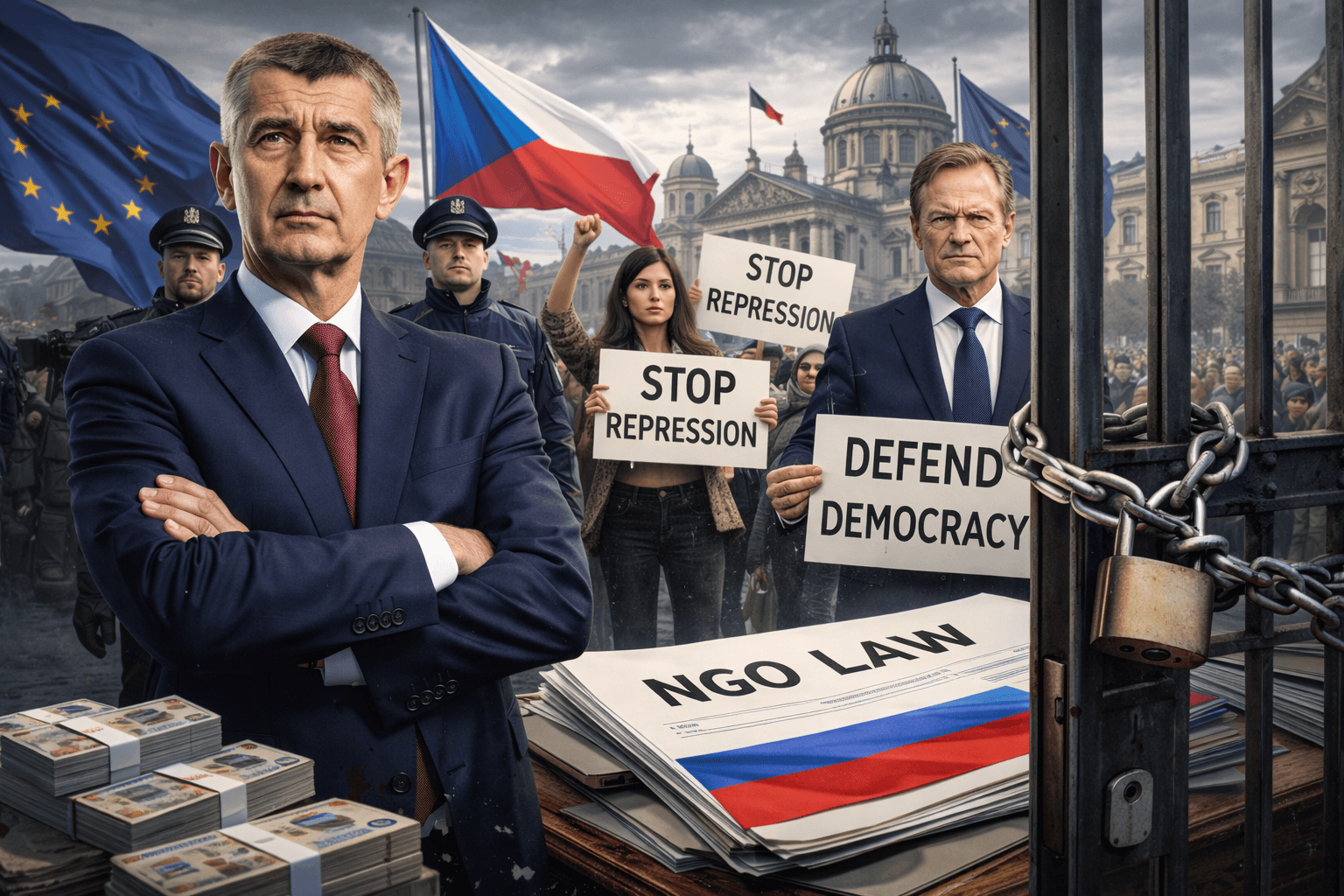
A new political controversy is unfolding in the Czech Republic after reports that the government of Prime Minister Andrej Babiš is preparing legislation that would significantly tighten regulation of non-profit organisations. Critics say the proposal resembles laws used in Russia to restrict civil society groups.
The proposed legislation is being developed by members of the governing coalition and advisers linked to Babiš’s political movement. Early drafts reportedly aim to introduce stricter oversight of non-profits operating in the country.
Supporters of the measure argue that tighter regulation is needed to increase transparency and monitor the influence of organisations receiving foreign funding. Opponents warn that the proposal could undermine democratic institutions and weaken independent civil society.
What the Proposed Law Would Do
According to reporting on the draft proposal, the legislation would place tougher requirements on non-governmental organisations, including additional reporting obligations and stronger government oversight.
The draft was reportedly prepared by Natálie Vachatová, an adviser connected to smaller nationalist political circles and a member of the Trikolora party.
Members of the Czech opposition say the changes could restrict the activities of civic groups and make it harder for non-profits to operate freely.
Ivan Bartoš, a member of parliament from the Pirate Party and a former minister, warned that the proposal could represent a troubling shift if enacted, arguing that such laws risk weakening democratic safeguards.
Why Critics Call It a “Russian-Style” Law
The controversy stems from comparisons with legislation adopted in Russia over the past decade.
Russia’s “foreign agent” and “undesirable organisations” laws allow authorities to label certain groups as security threats, impose heavy restrictions on their activities, and even shut them down.
Human-rights advocates across Europe say similar frameworks have been used by some governments to stigmatize civil society groups and limit political opposition.
Because of those precedents, critics fear that adopting comparable policies in the Czech Republic could weaken democratic norms within the European Union.
A Divisive Political Landscape
The debate is also tied to broader political tensions surrounding Babiš’s return to power.


-640x427.png&w=3840&q=75)
-1-640x427.png&w=3840&q=75)
-300x200.png&w=3840&q=75)

-300x200.png&w=3840&q=75)