Why the Philippines is Pushing for Peace
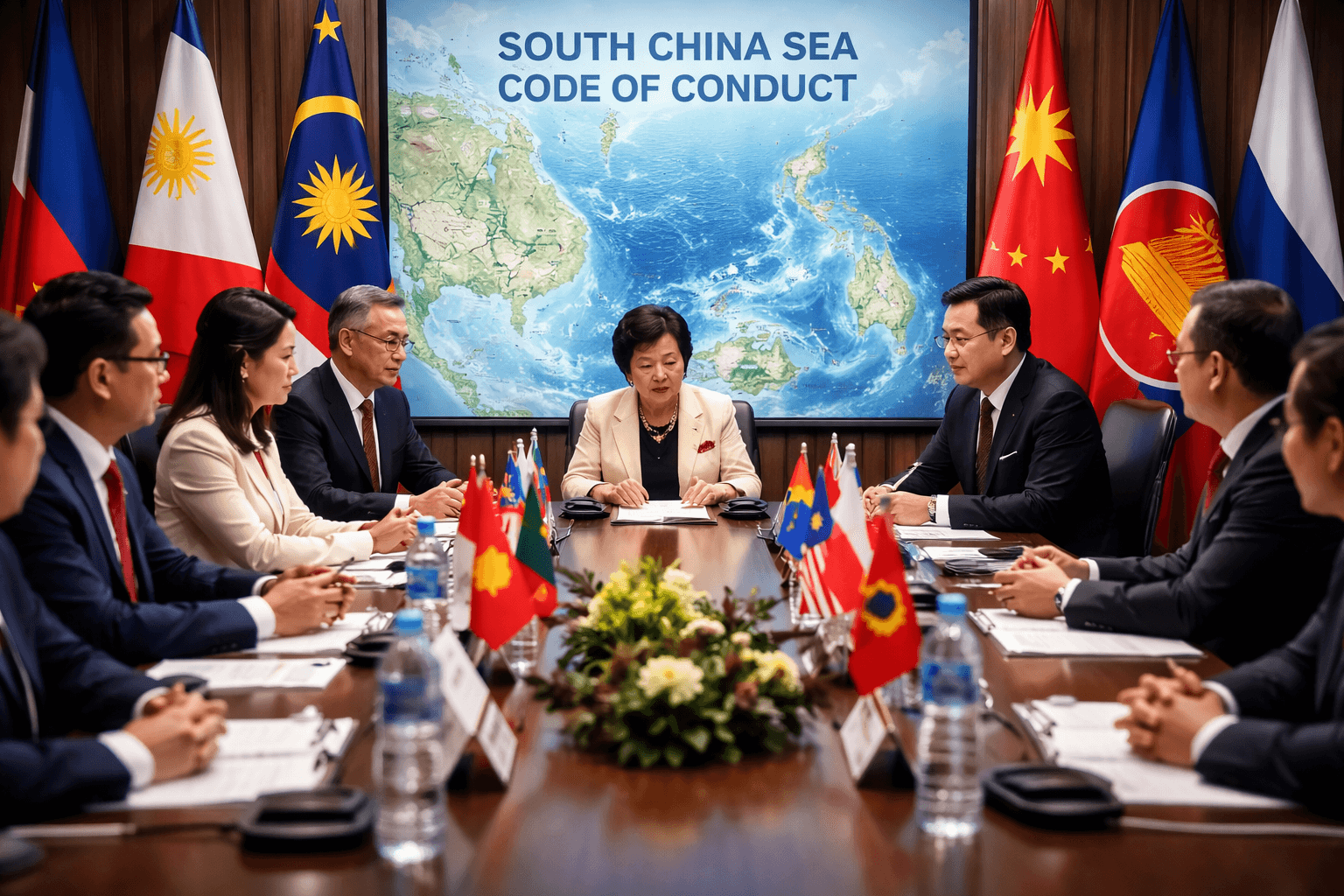
In 2026, a major diplomatic effort is underway in Southeast Asia as the Philippines, serving as chair of the Association of Southeast Asian Nations (ASEAN), pushes to finally conclude a long delayed Code of Conduct (COC) for the South China Sea one of the world’s most contested maritime regions. This initiative seeks to establish clear rules and guidelines for behaviour in those waters, reduce tensions, and prevent clashes between rival claimants, particularly China and several Southeast Asian nations.
The South China Sea is a vast and strategically vital body of water bordered by China, the Philippines, Vietnam, Malaysia, Brunei and Indonesia. It is rich in fish stocks, potential energy resources and crucial shipping lanes used by global trade. Overlapping territorial claims, especially China’s expansive insistence on nearly the entire sea, have led to years of diplomatic tension, naval standoffs and confrontations at sea. A COC is intended to manage these disputes peacefully and prevent escalation into armed conflict.
What Is the South China Sea Code of Conduct?
The Code of Conduct in the South China Sea is an ASEAN China agreement meant to provide a framework for how claimant states behave in the disputed waters. It is different from past statements or declarations because the goal is to create a document that has clear rules, mutual expectations and, ideally, legal weight that guides the actions of all parties.
In 2002, ASEAN and China signed the Declaration of Conduct of Parties in the South China Sea, a broad statement that acknowledged tensions and encouraged peaceful resolution. However, it was non-binding and lacked specifics on how disputes should be managed. Since then, negotiators have worked sporadically toward a more detailed COC, but progress has been slow.
Today, the COC would ideally set rules on issues such as:
Freedom of navigation and overflight in the sea;
Prevention of dangerous activities like unsafe maneuvers or aggressive maritime operations;
Processes for consultation and de-escalation if disputes arise; and
Commitment to international law, particularly the 1982 United Nations Convention on the Law of the Sea (UNCLOS).
Why the Philippines Is Leading the Push
The Philippines assumed the ASEAN chairmanship on January 1, 2026, and its leadership has elevated the COC as a top foreign policy priority. Manila believes that a robust and binding agreement could bring much-needed stability to the region after decades of simmering disputes and incidents at sea.


-640x427.png&w=3840&q=75)
-300x200.png&w=3840&q=75)
-1-300x200.png&w=3840&q=75)
-1-300x200.png&w=3840&q=75)