A shifting world calls for a fresh way to think about money
In recent global conversation a powerful message emerged from the World Economic Forum in Davos where Canada’s Prime Minister Mark Carney stated that the old international rules order is no longer a reliable foundation for stability. Instead he described that familiar framework as a pleasant fiction and argued that we are living through a rupture in how nations relate to each other and how economic systems operate. This candid assessment has captured attention not only among world leaders but also among investors who are searching for assets that may hold value in uncertain times.
The concept of a rules based global order has for decades been the backdrop for international trade cooperation and financial integration. Governments and institutions invoked it to assure businesses and citizens that agreements would be upheld and economic ties would remain stable. However in Davos Carney pointed out that this framework is under strain and may be failing. He explained that great powers have started to turn integration into a tool of leverage using tariffs as pressure points and financial systems as instruments of coercion. This shift changes how people think about financial access and safety.
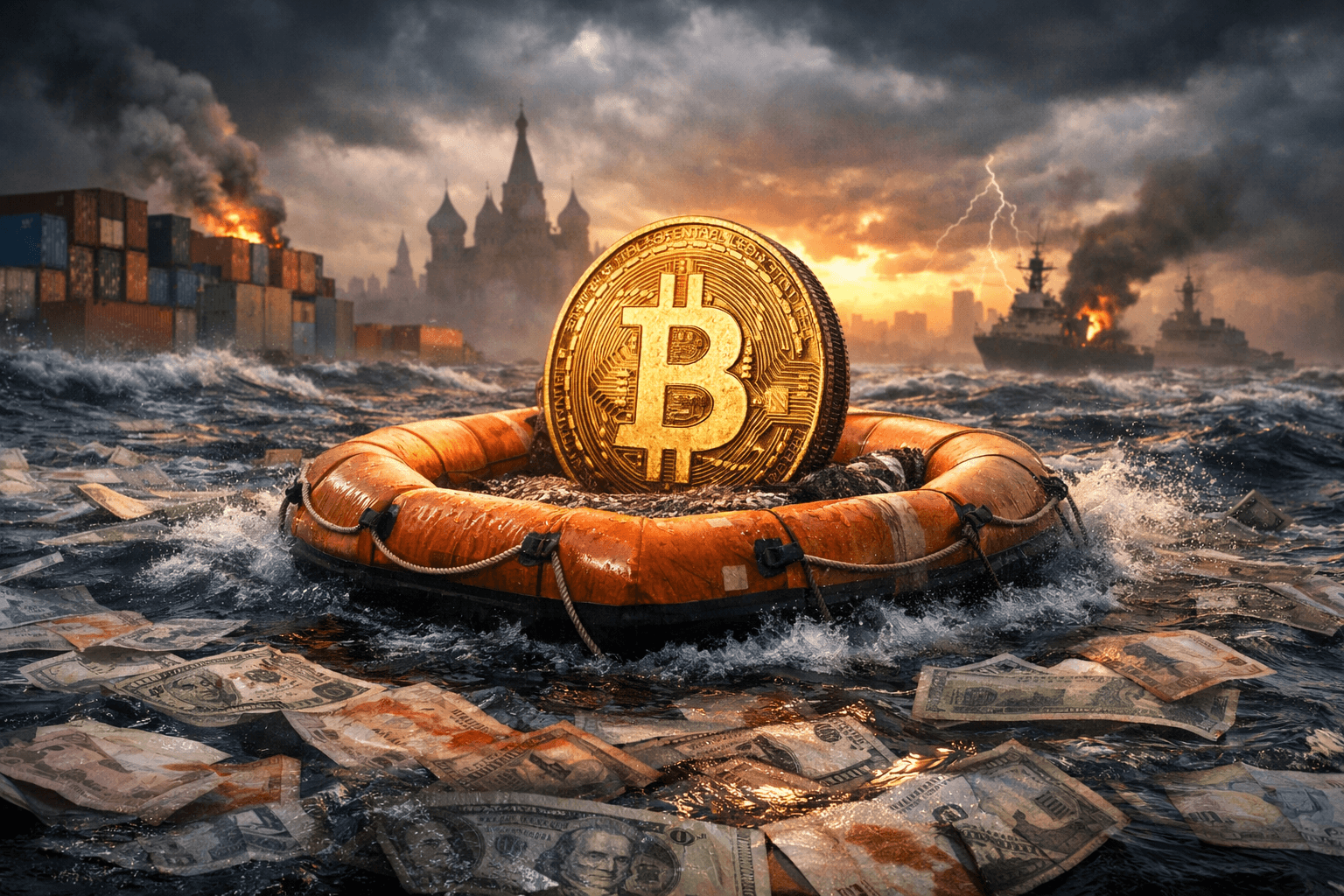
As geopolitical tensions intensify and traditional norms come under pressure many investors are reevaluating what they consider safe. Bitcoin has emerged in this conversation not because it is a perfect currency or a flawless bridge between nations but because it exists independently of most traditional chokepoints in global finance. In a world where banks and governments can restrict access or freeze accounts simply by changing policy or by exerting influence Bitcoin remains outside those conventional controls. It is this quality that has led some to see it as a form of optional protection against systemic stress.
This narrative does not suggest that Bitcoin solves the world’s problems or that it replaces established currency systems. It also does not mean that Bitcoin’s price will move straight up whenever global instability rises. In fact markets often experience the opposite in the short term as investors rush toward the most liquid assets they know. However the underlying story is about optionality and choice. In a stable world people may treat Bitcoin as an ideological experiment. In a world marked by uncertainty it becomes part of risk management conversations.
Political and economic fragmentation can change how money and value are viewed. Carney’s message underscores that when financial infrastructure becomes a tool of pressure and when international agreements no longer feel certain individuals and institutions look for alternatives that are not tied to a single country or alliance. Bitcoin in this context stands out because it does not require permission from any central authority and can be transferred across borders without being gated behind banking infrastructure.


-640x427.png&w=3840&q=75)
-3-640x427.png&w=3840&q=75)
-2-300x200.png&w=3840&q=75)